
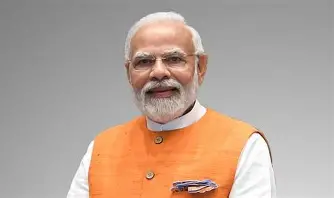
14th Prime Minister of India
General Information
| Field | Information |
|---|---|
| Full Name | Narendra Damodardas Modi |
| Commonly Known As | Narendra Modi |
| Born | 17 September 1950 |
| Age | 75 (as of 2026) |
| Birthplace | Vadnagar, Gujarat, India |
| Nationality | Indian |
| Citizenship | India |
| Occupation | Politician |
| Political Party | Bharatiya Janata Party (BJP) |
| Organization | Rashtriya Swayamsevak Sangh (RSS) |
| Years Active | 1971–present |
| Religion | Hinduism |
| Languages | Gujarati, Hindi, English |
| Residence | 7, Lok Kalyan Marg, New Delhi |
| Official Website | narendramodi.in |
Political Offices
| Field | Information |
|---|---|
| Current Office | Prime Minister of India |
| Assumed Office | 26 May 2014 |
| Term | Third consecutive term |
| Preceded By | Manmohan Singh |
| Constituency | Varanasi |
| Member of Parliament Since | 2014 |
| Parliament | Lok Sabha |
Previous Offices
| Field | Information |
|---|---|
| Chief Minister of Gujarat | 2001–2014 |
| Preceded By | Keshubhai Patel |
| Succeeded By | Anandiben Patel |
Personal Details
| Field | Information |
|---|---|
| Father | Damodardas Mulchand Modi |
| Mother | Heeraben Modi |
| Marital Status | Married |
| Spouse | Jashodaben Narendrabhai Modi |
| Children | None |
| Siblings | Five siblings |
Education
| Field | Information |
|---|---|
| Schooling | Vadnagar schools |
| Bachelor’s Degree | B.A. (Political Science) |
| Master’s Degree | M.A. (Political Science) |
Political Career
| Field | Information |
|---|---|
| RSS Joined | During youth |
| BJP Joined | 1980s |
| National General Secretary | Yes |
| Chief Minister | 2001–2014 |
| Prime Minister | Since 2014 |
Major Initiatives
- Digital India
- Make in India
- Startup India
- Skill India
- Swachh Bharat Mission
- Ayushman Bharat
- PM Gati Shakti
- Atmanirbhar Bharat
- Jan Dhan Yojana
- Jal Jeevan Mission
- Ujjwala Yojana
- PM-KISAN
Major Legislative Actions
- Goods and Services Tax (GST)
- Insolvency and Bankruptcy Code (IBC)
- Abrogation of Article 370
- Citizenship Amendment Act (CAA)
- Triple Talaq legislation
- New Criminal Laws
- Women’s Reservation Bill
- Digital Personal Data Protection Act
Foreign Policy Highlights
- Neighbourhood First
- Act East Policy
- Indo-Pacific Strategy
- International Solar Alliance
- G20 Presidency (2023)
- Quad Cooperation
- India–Middle East–Europe Economic Corridor (IMEC)
Awards & Recognition
- Numerous national and international honours
- Featured among the world’s most influential leaders in multiple global publications
- Recipient of several foreign state honours
Publications
- Exam Warriors
- Jyotipunj
- Convenient Action
- Social Harmony
- Letters to Mother
Signature
(Signature Image)
Official Links
- Official Website
- Prime Minister’s Office
- X (Twitter)
- YouTube
At a Glance
| Attribute | Details |
|---|---|
| Profession | Politician |
| Political Party | BJP |
| Current Position | Prime Minister of India |
| State Represented | Uttar Pradesh (Varanasi) |
| Previous State Leadership | Gujarat |
| Years in National Office | Since 2014 |
| Known For | Governance reforms, infrastructure development, digital transformation, foreign policy, economic initiatives |
| Leadership Style | Executive leadership, public communication, administrative reforms |
Early Life and Education
Narendra Damodardas Modi was born on 17 September 1950 in Vadnagar, a historic town in the Mehsana district of the present-day state of Gujarat, India. He was born into a Gujarati family to Damodardas Mulchand Modi and Heeraben Modi. Modi was one of six children in the family and spent much of his childhood in modest economic circumstances. His upbringing in a small town and experiences during his early years have frequently been referenced in accounts of his personal and political journey.
Modi completed his primary and secondary education at schools in Vadnagar. According to teachers and classmates, he was an average student academically but showed a keen interest in reading, debating, public speaking, and extracurricular activities. He participated in school theatre productions and National Cadet Corps (NCC)-related activities, where he developed an early interest in leadership, discipline, and public service. He was also known for spending time in local libraries, reading books on Indian history, culture, politics, and the lives of influential leaders.
During his childhood, Modi is reported to have helped his father sell tea at the Vadnagar railway station and later assisted in his family’s small tea business. This aspect of his early life has become a prominent part of his public biography and has often been highlighted in political campaigns as an example of his humble beginnings. The circumstances surrounding his childhood have also been the subject of discussion among journalists, historians, and political commentators.
As a young man, Modi developed an interest in spirituality, philosophy, and Indian culture. He has stated that he traveled across parts of northern and northeastern India for a period of self-discovery, visiting religious institutions, Himalayan regions, and organizations associated with spiritual traditions. Although many details of these travels are based primarily on autobiographical accounts and interviews, they are generally regarded as an important phase in the formation of his worldview.
Modi became associated with the Rashtriya Swayamsevak Sangh (RSS) during his youth, initially participating as a volunteer (swayamsevak). The organization emphasizes discipline, social service, cultural nationalism, and character development. His involvement with the RSS provided him with organizational experience, leadership training, and opportunities to participate in community service activities, laying the foundation for his future political career.
Regarding higher education, Modi earned a Bachelor of Arts (B.A.) degree in Political Science through distance education from the School of Open Learning, University of Delhi. He subsequently obtained a Master of Arts (M.A.) degree in Political Science from Gujarat University. His educational qualifications have periodically attracted public discussion and media attention, particularly concerning the documentation of his degrees. Universities and government authorities have maintained that the degrees were awarded according to their records, while the subject has remained part of broader political debate.
Modi has often described his early life as one shaped by hard work, self-reliance, discipline, and service. His supporters view these experiences as having influenced his emphasis on governance, infrastructure development, entrepreneurship, and public administration. Critics, meanwhile, note that some aspects of his early biography have been interpreted differently by historians and political observers. As a result, several elements of Modi’s childhood and formative years continue to be examined within the wider context of his public life.
The combination of a modest upbringing, exposure to grassroots social work, interest in Indian philosophy, and early organizational experience through the RSS significantly influenced Narendra Modi’s development as a political leader. These formative years laid the foundation for his subsequent rise within the Bharatiya Janata Party (BJP) and eventually to the office of Prime Minister of India.
Early Political Career
Narendra Modi’s political career began through his long association with the Rashtriya Swayamsevak Sangh (RSS), a Hindu nationalist volunteer organization. During his youth, he participated in the RSS as a swayamsevak (volunteer), where he received training in organizational discipline, leadership, and community service. His dedication and organizational abilities led to his appointment as a pracharak (full-time campaigner), a role that required extensive travel, grassroots mobilization, and coordination of social and ideological activities.
Throughout the 1970s, Modi worked with the RSS in various capacities across Gujarat. During the Emergency (1975–1977) declared by Prime Minister Indira Gandhi, the RSS was banned, and many of its members were arrested. According to accounts from the RSS and Modi’s own writings, he worked underground during this period, assisting with organizational activities and communication among activists. Historians note that the Emergency was a formative period for many future leaders of the Bharatiya Janata Party (BJP), including Modi.
As the Janata Party emerged after the Emergency, several RSS members became active in electoral politics. In 1980, the Bharatiya Janata Party (BJP) was established as the successor to the Bharatiya Jana Sangh. Modi formally joined the BJP in 1987, marking his transition from a full-time RSS organizer to an active political strategist within the party.
Within the Gujarat BJP, Modi quickly gained recognition for his organizational skills, strategic planning, and ability to coordinate large-scale political campaigns. He played an important role in strengthening the party’s grassroots network by recruiting volunteers, organizing membership drives, and improving communication between local and state-level party units. His work contributed to the BJP’s growing electoral presence in Gujarat during the late 1980s and early 1990s.
One of Modi’s earliest major political assignments was helping organize the Nyay Yatra in Gujarat, a statewide political campaign aimed at increasing public outreach. His ability to manage logistics and coordinate volunteers enhanced his reputation within the party leadership. He later played a significant role in organizing the Somnath to Ayodhya Rath Yatra (1990), led by BJP leader Lal Krishna Advani, and the Ekta Yatra (1991–1992), led by Murli Manohar Joshi. These nationwide campaigns significantly expanded the BJP’s visibility and strengthened Modi’s standing as an effective political organizer.
By the early 1990s, Modi had become one of the BJP’s most prominent organizational leaders in Gujarat. He was appointed General Secretary (Organization) of the Gujarat BJP, where he focused on election management, cadre development, campaign planning, and organizational restructuring. His work was widely credited with improving the party’s electoral preparedness and expanding its influence across the state.
In 1995, the BJP formed its first majority government in Gujarat. Although Modi did not contest elections or hold public office at the time, he was regarded as one of the key strategists behind the party’s organizational success. Following internal political developments within the Gujarat BJP, Modi was assigned greater responsibilities at the national level.
In 1995, he was appointed National Secretary of the BJP and was entrusted with overseeing party affairs in several northern Indian states, including Haryana, Himachal Pradesh, Punjab, and Jammu and Kashmir. He later became the party’s National General Secretary (Organization), one of the BJP’s most influential organizational positions. In this role, he worked closely with senior party leaders on election strategy, organizational expansion, candidate selection, and campaign management across India.
During the late 1990s, Modi became known within the BJP as a skilled election strategist and organizational planner. His emphasis on disciplined party structure, grassroots mobilization, volunteer management, and modern campaign techniques contributed to the BJP’s growing electoral strength. Senior party leaders increasingly viewed him as an effective administrator capable of handling complex political responsibilities.
A major turning point in Modi’s political career came in October 2001, when the BJP leadership appointed him Chief Minister of Gujarat, replacing Keshubhai Patel. The decision followed concerns over the state’s administrative performance and the political impact of the devastating 2001 Gujarat earthquake. Although Modi had spent many years in party organization, he had never previously held elected public office. To continue as Chief Minister under constitutional requirements, he successfully contested a by-election to the Gujarat Legislative Assembly shortly after assuming office.
Modi’s appointment as Chief Minister marked the transition from his career as an organizational leader to one as an elected executive. His years in the RSS and BJP organization had established his reputation as a disciplined strategist, effective administrator, and influential political organizer, laying the foundation for his subsequent rise to national leadership and, eventually, the office of Prime Minister of India.
RSS and BJP Organizational Work
Narendra Modi’s organizational career was shaped by his long association with the Rashtriya Swayamsevak Sangh (RSS) and later the Bharatiya Janata Party (BJP). Before entering electoral politics, he spent more than two decades working primarily as an organizer, administrator, and political strategist. During this period, he developed skills in leadership, grassroots mobilization, volunteer management, and election planning, which later became defining characteristics of his political career.
Association with the RSS
Modi became associated with the RSS during his childhood in Vadnagar, Gujarat, where he attended local shakhas (daily training gatherings). Influenced by RSS volunteers and local leaders, he gradually became more involved in the organization’s activities, which emphasized discipline, physical training, social service, and cultural education.
In the early 1970s, Modi became a full-time pracharak (campaigner) of the RSS. Pracharaks are expected to dedicate themselves entirely to organizational work, often serving in different regions as directed by the organization. In this capacity, Modi was responsible for organizing volunteers, conducting training sessions, coordinating public outreach, and strengthening the RSS network across Gujarat.
The Emergency (1975–1977) declared by Prime Minister Indira Gandhi marked a significant period in Modi’s organizational career. During the Emergency, the RSS was banned, and many political activists were detained. According to RSS accounts and Modi’s own writings, he worked underground to assist communication among activists, distribute literature, and support organizational activities. Historians consider the Emergency an important formative experience for many future BJP leaders, including Modi.
Transition to the Bharatiya Janata Party
Following the formation of the Bharatiya Janata Party (BJP) in 1980, many RSS volunteers began taking active roles in the new political party. Modi formally joined the BJP in 1987, marking the beginning of his full-time political career.
Initially appointed as an organizational secretary in the Gujarat BJP, Modi focused on expanding the party’s grassroots structure. His responsibilities included recruiting new members, coordinating district-level committees, training party workers, organizing political campaigns, and improving communication between local and state leadership. His systematic approach to organization contributed to the BJP’s growing influence in Gujarat during the late 1980s.
Building the BJP in Gujarat
During the late 1980s and early 1990s, Modi played a significant role in strengthening the BJP’s organizational framework in Gujarat. He emphasized disciplined party management, extensive volunteer networks, and data-driven election preparation. Political observers have noted that his administrative style combined centralized planning with strong local organizational structures.
Modi helped organize several statewide campaigns, including the Nyay Yatra, which aimed to increase the party’s outreach among voters across Gujarat. His ability to manage logistics, coordinate thousands of volunteers, and oversee campaign operations enhanced his reputation within the BJP leadership.
He also played a key organizational role in two major national political campaigns:
- Somnath to Ayodhya Rath Yatra (1990): Led by senior BJP leader Lal Krishna Advani, this nationwide campaign significantly increased the BJP’s political visibility. Modi was responsible for coordinating various logistical and organizational aspects of the yatra in Gujarat.
- Ekta Yatra (1991–1992): Led by Murli Manohar Joshi, this campaign traveled across India to promote national integration. Modi again handled important organizational responsibilities, further strengthening his standing within the party.
These assignments demonstrated his ability to manage complex political events involving extensive travel, security coordination, volunteer mobilization, and media planning.
Rise within the National BJP Organization
Recognizing his organizational abilities, the BJP appointed Modi as National Secretary in 1995. In this role, he was assigned responsibility for party affairs in several northern Indian states, including Haryana, Himachal Pradesh, Punjab, and Jammu and Kashmir. His responsibilities included coordinating state units, monitoring election preparations, resolving organizational issues, and assisting with campaign strategy.
In 1998, Modi was promoted to National General Secretary (Organization), one of the BJP’s most influential organizational positions. Working closely with the party’s senior leadership, he oversaw election management, organizational expansion, membership development, and coordination between state and national units. He was also involved in planning election campaigns, identifying organizational priorities, and strengthening the BJP’s presence in regions where it sought greater electoral support.
Organizational Style
Political analysts have frequently described Modi’s organizational approach as structured, disciplined, and highly goal-oriented. His management style emphasized detailed planning, clearly defined responsibilities, regular performance reviews, and efficient communication across different levels of the party organization.
During his tenure as an organizational leader, Modi advocated greater use of technology, systematic voter outreach, volunteer training, and professional campaign management. Many observers have noted that these methods contributed to the BJP’s growing organizational capacity during the 1990s.
Legacy of Organizational Work
By the time Modi was appointed Chief Minister of Gujarat in October 2001, he had spent more than two decades in organizational roles rather than elected office. His experience within the RSS and BJP provided extensive exposure to political strategy, public communication, administrative coordination, and election management.
Historians and political scientists generally regard this period as foundational to Modi’s later leadership style. The organizational experience he gained through the RSS and BJP is widely considered to have influenced his approach to governance, decision-making, party management, and national political campaigns after assuming executive office.
Modi’s years as an RSS pracharak and BJP organizer established him as one of the party’s most experienced political strategists before his transition to elected leadership. These formative organizational roles laid the groundwork for his subsequent tenure as Chief Minister of Gujarat and, later, as Prime Minister of India.
Chief Minister of Gujarat (2001–2014)
Narendra Modi served as the 14th Chief Minister of Gujarat from 7 October 2001 to 22 May 2014. His tenure of more than twelve years was one of the longest in the state’s history and marked a significant period in Gujarat’s political, economic, and administrative development. During this time, his government emphasized industrialization, infrastructure development, investment promotion, agricultural modernization, and administrative reforms. At the same time, his tenure was also shaped by the 2002 Gujarat riots, an event that remains one of the most debated and controversial episodes in modern Indian political history.
Appointment as Chief Minister
In 2001, the Bharatiya Janata Party (BJP) leadership replaced Chief Minister Keshubhai Patel following concerns over the state’s administrative performance, political challenges, and the aftermath of the 2001 Gujarat earthquake, which had caused widespread destruction, particularly in the Kutch region. Although Modi had spent many years as an organizational leader within the RSS and BJP, he had not previously held elected public office.
Modi was sworn in as Chief Minister on 7 October 2001. To satisfy constitutional requirements, he subsequently contested and won a by-election from the Rajkot II Assembly constituency, becoming an elected member of the Gujarat Legislative Assembly.
2002 Gujarat Assembly Election
Following political developments in early 2002, the Gujarat Legislative Assembly was dissolved and fresh elections were held in December 2002. The BJP, led by Modi, secured a decisive victory, winning a majority of seats in the Assembly. The result established Modi as one of the BJP’s leading state-level political figures and provided his government with a renewed electoral mandate.
He was subsequently re-elected as Chief Minister after leading the BJP to further victories in the 2007 and 2012 Gujarat Legislative Assembly elections, remaining in office until becoming Prime Minister of India in 2014.
Economic Development
Economic growth became a central objective of Modi’s administration. His government introduced policies intended to improve Gujarat’s business environment, simplify administrative procedures, encourage industrial investment, and expand manufacturing capacity.
During his tenure, Gujarat recorded sustained economic growth across several sectors, including manufacturing, petrochemicals, pharmaceuticals, automobiles, engineering, textiles, ports, and renewable energy. The state attracted investments from both Indian and international companies, reinforcing its position as one of India’s leading industrial economies.
Several industrial clusters and Special Economic Zones (SEZs) expanded during this period, particularly around Ahmedabad, Surat, Vadodara, Rajkot, Bharuch, Jamnagar, Sanand, and Kutch.
Vibrant Gujarat Summit
One of the flagship initiatives of Modi’s government was the Vibrant Gujarat Global Investors Summit, first held in 2003. Organized biennially, the summit brought together business leaders, policymakers, investors, diplomats, and multinational corporations to explore investment opportunities within Gujarat.
Over time, the event became one of India’s largest investment summits and contributed significantly to Gujarat’s image as a destination for business and industrial development. Although announced investment figures often exceeded the value of projects eventually implemented, the summit played an important role in promoting the state’s investment profile.
Infrastructure Development
The Modi government placed considerable emphasis on infrastructure modernization.
Major areas of development included:
- Expansion and modernization of highways and state roads.
- Improvement of rural road connectivity.
- Development of ports along Gujarat’s coastline.
- Expansion of industrial corridors.
- Strengthening electricity transmission networks.
- Urban infrastructure projects.
- Water resource management initiatives.
The government also promoted public-private partnerships (PPPs) in infrastructure development.
Agricultural Reforms
Although Gujarat was widely known for industrial growth, agriculture also experienced significant changes during Modi’s tenure.
Government initiatives focused on:
- Expansion of irrigation infrastructure.
- Promotion of micro-irrigation techniques.
- Improved agricultural extension services.
- Soil Health Card programme.
- Krishi Mahotsav outreach campaigns.
- Agricultural technology adoption.
- Water conservation projects.
Agricultural production and productivity increased in several regions, although analysts have attributed this growth to a combination of policy initiatives, improved irrigation, favorable rainfall in certain years, and broader economic trends.
Power Sector
Electricity reforms became another major component of Modi’s administration.
The government implemented the Jyotigram Yojana, which separated agricultural and domestic electricity feeders to improve power distribution efficiency. The programme aimed to provide more reliable electricity to rural households while improving electricity management for agricultural users.
The initiative contributed to expanded rural electrification and improvements in power supply across much of the state.
E-Governance and Administrative Reforms
The Gujarat government introduced several e-governance initiatives intended to improve administrative efficiency and public service delivery.
These included:
- Online government services.
- Digital land records.
- Citizen service centres.
- Electronic procurement systems.
- Administrative monitoring platforms.
- Performance evaluation mechanisms.
Supporters argued that these reforms reduced bureaucratic delays and improved transparency, while critics maintained that implementation varied across departments and regions.
Education and Health
The state government launched programmes aimed at improving school enrolment, reducing dropout rates, and increasing literacy.
Notable initiatives included:
- Shala Praveshotsav.
- Kanya Kelavani campaign.
- Expansion of educational infrastructure.
- Teacher recruitment.
- Health outreach programmes.
- Maternal and child health initiatives.
Health indicators improved in several areas during this period, although disparities remained between different regions and communities.
2002 Gujarat Riots
One of the most significant and controversial events of Modi’s tenure was the 2002 Gujarat riots, which occurred following the Godhra train burning on 27 February 2002, in which 59 Hindu pilgrims were killed. Widespread communal violence subsequently broke out across several parts of Gujarat, resulting in the deaths of more than one thousand people, the majority of whom were Muslims, according to official figures. Independent organizations and scholars have reported varying estimates.
The riots attracted extensive national and international attention and generated sustained debate regarding the actions of the state government during the violence. Human rights organizations, political opponents, and some scholars criticized the government’s handling of the situation and alleged failures in preventing or controlling the violence.
Modi consistently denied allegations of personal involvement or complicity. Multiple investigations, including those conducted by the Supreme Court-appointed Special Investigation Team (SIT), examined allegations against him. In 2012, the SIT concluded that there was insufficient evidence to prosecute Modi, and the findings were subsequently upheld by Indian courts. Despite these legal outcomes, the events remain the subject of continuing academic, political, and public debate.
Public Image
During his tenure as Chief Minister, Modi cultivated an image of administrative efficiency, economic development, and decisive leadership. His emphasis on infrastructure, investment, governance reforms, and industrial growth contributed to the emergence of what supporters described as the “Gujarat Model” of development.
Supporters regarded the model as an example of rapid economic growth, efficient governance, and business-friendly policies. Critics argued that while Gujarat achieved notable industrial progress, challenges relating to social development, income inequality, environmental concerns, and inclusive growth also required consideration. The concept of the “Gujarat Model” became a prominent topic in Indian political discourse and was widely discussed during the 2014 general election campaign.
National Recognition
By the early 2010s, Modi had become one of the BJP’s most prominent leaders. His repeated electoral victories, reputation for administrative management, and focus on economic development increased his national profile. In 2013, the BJP announced him as its prime ministerial candidate for the 2014 Indian general election, marking his transition from state leadership to national politics.
Legacy
Narendra Modi’s tenure as Chief Minister of Gujarat significantly influenced both the state’s development trajectory and his subsequent political career. His administration is associated with large-scale infrastructure projects, industrial expansion, governance reforms, agricultural initiatives, and investment promotion. Simultaneously, the 2002 Gujarat riots remain a defining and contested aspect of his legacy.
Historians, economists, and political scientists continue to examine Modi’s years as Chief Minister from multiple perspectives, recognizing both the state’s economic transformation and the enduring debates surrounding governance, social development, and communal relations. His leadership in Gujarat established the political foundation that ultimately led to his election as Prime Minister of India in 2014.
Prime Minister of India (2014–Present)
Narendra Modi has served as the 14th Prime Minister of India since 26 May 2014. He is the first Prime Minister born after India’s independence in 1947 and one of the longest-serving prime ministers in the country’s history. Since assuming office, Modi has led three consecutive governments, following the 2014, 2019, and 2024 general elections. His premiership has been characterized by initiatives focused on economic development, digital transformation, infrastructure expansion, social welfare, national security, administrative reforms, and an increasingly active role for India in global affairs.
2014 General Election
In September 2013, the Bharatiya Janata Party (BJP) announced Modi as its prime ministerial candidate for the 2014 Indian general election. The BJP’s campaign emphasized economic growth, job creation, governance reforms, anti-corruption measures, infrastructure development, and efficient public administration.
The election resulted in a decisive victory for the BJP, which secured 282 seats in the Lok Sabha, becoming the first single political party since 1984 to obtain an outright parliamentary majority. The National Democratic Alliance (NDA), led by the BJP, won 336 seats overall.
Modi was sworn in as Prime Minister on 26 May 2014 at Rashtrapati Bhavan in New Delhi. The inauguration ceremony was notable for the attendance of leaders from South Asian countries, reflecting the government’s emphasis on regional diplomacy.
First Term (2014–2019)
During his first term, the Modi government introduced a wide range of reforms aimed at modernizing India’s economy, expanding financial inclusion, improving public service delivery, and strengthening infrastructure.
Economic and Financial Reforms
The government launched several flagship programmes, including:
- Pradhan Mantri Jan Dhan Yojana, which expanded access to banking services.
- Make in India, intended to encourage manufacturing and attract investment.
- Digital India, promoting digital infrastructure and online public services.
- Startup India, supporting entrepreneurship and innovation.
- Skill India, aimed at vocational education and workforce development.
- Stand-Up India, facilitating entrepreneurship among underrepresented groups.
Major legislative reforms included the introduction of the Goods and Services Tax (GST) in 2017, creating a unified indirect tax system across India, and the implementation of the Insolvency and Bankruptcy Code (IBC) to improve insolvency resolution and strengthen the business environment.
Demonetization
On 8 November 2016, the government announced the demonetization of ₹500 and ₹1,000 currency notes, which constituted a large share of the currency in circulation. The stated objectives included reducing counterfeit currency, curbing black money, and encouraging digital payments.
Supporters argued that the policy accelerated digital transactions and increased tax compliance. Critics contended that it caused short-term economic disruption, particularly affecting small businesses, informal workers, and cash-dependent sectors. Economists continue to debate its long-term economic impact.
Infrastructure Development
Infrastructure became a major focus of the government’s agenda.
Key areas included:
- National highways and expressways.
- Railway modernization.
- Metro rail expansion.
- Inland waterways.
- Airport development.
- Rural electrification.
- Affordable housing.
- Digital connectivity.
- Renewable energy projects.
The government also expanded investments in logistics and industrial corridors to improve connectivity and economic competitiveness.
Foreign Policy
Modi adopted an active diplomatic approach, emphasizing stronger relations with neighboring countries while expanding partnerships with major global powers.
Important initiatives included:
- Neighbourhood First Policy.
- Act East Policy.
- Indo-Pacific cooperation.
- International Solar Alliance.
- Strategic partnerships with the United States, Japan, France, Australia, and Gulf countries.
India also increased its participation in multilateral organizations such as the G20, BRICS, Quad, and the United Nations.
Second Term (2019–2024)
In the 2019 general election, the BJP secured 303 seats, improving upon its 2014 performance. The NDA retained a comfortable parliamentary majority, and Modi was sworn in for a second term on 30 May 2019.
Constitutional and Legislative Changes
Several major policy decisions were implemented during the second term.
Abrogation of Article 370
On 5 August 2019, Parliament approved legislation effectively revoking the special constitutional status of the former state of Jammu and Kashmir under Article 370. The state was subsequently reorganized into the Union Territories of Jammu and Kashmir and Ladakh.
Supporters viewed the measure as promoting national integration and administrative efficiency. Critics raised constitutional, political, and human rights concerns regarding the decision and its implementation.
Citizenship Amendment Act (CAA)
The Citizenship Amendment Act, 2019 amended India’s citizenship laws by providing an expedited pathway to citizenship for certain religious minorities from Afghanistan, Bangladesh, and Pakistan.
Supporters argued that the legislation addressed humanitarian concerns affecting persecuted minorities. Critics contended that its exclusion of Muslims raised constitutional and equality-related issues, leading to widespread public debate and protests.
COVID-19 Pandemic
The COVID-19 pandemic posed one of the greatest challenges of Modi’s premiership.
Government measures included:
- Nationwide lockdowns.
- Public health guidelines.
- Expansion of healthcare infrastructure.
- Vaccination campaigns.
- Economic relief packages.
- Vaccine production and international vaccine assistance.
India administered one of the world’s largest COVID-19 vaccination programmes. While the government was commended for scaling up vaccine manufacturing and distribution, it also faced criticism regarding preparedness during the severe second wave in 2021, which placed significant pressure on the healthcare system.
Atmanirbhar Bharat
In response to the pandemic and global economic uncertainty, the government launched the Atmanirbhar Bharat (Self-Reliant India) initiative. The programme aimed to strengthen domestic manufacturing, improve supply chain resilience, encourage innovation, and reduce dependence on imports in strategic sectors.
Third Term (2024–Present)
Following the 2024 Indian general election, the BJP emerged as the largest party in the Lok Sabha, while the National Democratic Alliance (NDA) retained a parliamentary majority. Modi was sworn in for a third consecutive term as Prime Minister on 9 June 2024, becoming only the second Indian Prime Minister, after Jawaharlal Nehru, to achieve three consecutive electoral victories.
The third-term agenda has emphasized:
- Continued infrastructure development.
- Manufacturing expansion.
- Semiconductor production.
- Artificial intelligence and digital technologies.
- Green energy transition.
- Employment generation.
- Agricultural modernization.
- Defence manufacturing.
- Logistics and transport connectivity.
- Ease of doing business.
The government has also continued implementing long-term programmes such as PM Gati Shakti, National Infrastructure Pipeline, Jal Jeevan Mission, Ayushman Bharat, and various digital governance initiatives.
Governance and Administrative Reforms
Throughout his premiership, Modi has promoted administrative modernization through increased use of digital technologies, performance monitoring, and direct benefit transfers.
Notable governance initiatives include:
- Digital public services.
- Unified Payments Interface (UPI) expansion.
- Aadhaar-linked welfare delivery.
- Government e-Marketplace (GeM).
- Direct Benefit Transfer (DBT) system.
- Online grievance redressal platforms.
- Paperless governance initiatives.
Supporters argue that these measures have improved efficiency, transparency, and financial inclusion, while critics have raised concerns regarding privacy, digital access disparities, and implementation challenges.
National Security
The Modi government has placed significant emphasis on national security and defence modernization.
Major developments include:
- Modernization of the armed forces.
- Defence procurement reforms.
- Expansion of indigenous defence manufacturing.
- Counter-terrorism initiatives.
- Border infrastructure improvements.
- Enhanced maritime security.
- Strategic partnerships in defence cooperation.
Military operations such as the 2016 surgical strikes and the 2019 Balakot airstrike received widespread public attention and influenced national security discourse.
Public Image
Modi is recognized for his extensive public engagement through mass rallies, digital platforms, radio broadcasts, and international diplomacy. His monthly radio programme Mann Ki Baat has become a regular platform for discussing government initiatives, social issues, and national campaigns.
He is among the world’s most followed political leaders on social media and has emphasized the use of digital communication to engage directly with citizens.
Supporters describe Modi as a decisive administrator who has strengthened India’s global standing, accelerated infrastructure development, expanded welfare programmes, and promoted technological innovation. Critics have expressed concerns regarding democratic institutions, civil liberties, media freedom, religious polarization, unemployment, and the concentration of executive power. These differing perspectives continue to shape scholarly and political assessments of his premiership.
Legacy
Narendra Modi’s tenure as Prime Minister has significantly influenced India’s political, economic, and international trajectory. His governments have introduced major constitutional, economic, administrative, and technological reforms while overseeing extensive infrastructure development and expanded welfare programmes. His leadership has also been accompanied by substantial public debate over governance, social policy, and democratic institutions.
As one of the most influential figures in contemporary Indian politics, Modi’s premiership continues to be studied by historians, political scientists, economists, and international observers. The long-term impact of his policies on India’s development, governance, and role in global affairs will remain a subject of continuing analysis in the years ahead.
First Term as Prime Minister (2014–2019)
Narendra Modi’s first term as Prime Minister of India, spanning from 26 May 2014 to 30 May 2019, marked a significant period of political and administrative change. Following the Bharatiya Janata Party’s (BJP) decisive victory in the 2014 general election, Modi led the first single-party majority government in the Lok Sabha since 1984. His administration introduced a wide range of reforms and national initiatives focusing on economic growth, financial inclusion, digital governance, infrastructure development, social welfare, foreign policy, and national security.
Formation of the Government
After the BJP secured 282 seats in the 2014 Lok Sabha elections, Narendra Modi was invited by the President of India to form the government. He took the oath of office as the 14th Prime Minister of India on 26 May 2014 at Rashtrapati Bhavan in New Delhi.
The swearing-in ceremony was notable for the invitation extended to leaders of the South Asian Association for Regional Cooperation (SAARC) countries, reflecting the government’s emphasis on strengthening regional diplomacy through its Neighbourhood First Policy.
Governance and Administrative Reforms
One of the Modi government’s primary objectives during its first term was improving the efficiency, transparency, and accountability of public administration.
Several initiatives were introduced to modernize governance, including:
- Expansion of digital government services.
- Promotion of paperless administration.
- Online grievance redressal systems.
- Direct Benefit Transfer (DBT) programmes.
- Increased use of Aadhaar-linked service delivery.
- Government e-Marketplace (GeM) for public procurement.
- Simplification of regulatory procedures for businesses.
The government also emphasized reducing bureaucratic delays and improving coordination among ministries through technology-driven monitoring systems.
Economic Policy
Economic development formed the cornerstone of Modi’s first-term agenda. The government introduced reforms intended to improve the investment climate, encourage entrepreneurship, and strengthen India’s manufacturing and service sectors.
Make in India
Launched in September 2014, Make in India sought to transform India into a global manufacturing hub by encouraging domestic production, attracting foreign direct investment (FDI), improving ease of doing business, and supporting industrial innovation.
The initiative identified multiple priority sectors, including automobiles, electronics, defence manufacturing, textiles, renewable energy, biotechnology, railways, and aviation.
Startup India
Introduced in 2016, Startup India aimed to promote entrepreneurship by providing policy support, simplified regulations, tax incentives, access to funding, and incubation opportunities for startups and innovators.
The programme contributed to the rapid expansion of India’s startup ecosystem during Modi’s first term.
Stand-Up India
The Stand-Up India scheme was launched to encourage entrepreneurship among women and members of Scheduled Castes (SC) and Scheduled Tribes (ST) by facilitating institutional credit for new enterprises.
Financial Inclusion
Pradhan Mantri Jan Dhan Yojana
The Pradhan Mantri Jan Dhan Yojana (PMJDY), launched in August 2014, became one of the world’s largest financial inclusion programmes.
Its objectives included:
- Universal access to banking.
- Opening zero-balance bank accounts.
- Financial literacy.
- Insurance coverage.
- Pension access.
- Direct transfer of government benefits.
Millions of previously unbanked citizens gained access to formal banking services through the programme.
Digital India
The Digital India initiative, launched in 2015, aimed to expand digital infrastructure, improve internet connectivity, and increase the delivery of public services through digital platforms.
Major components included:
- Digital identity through Aadhaar integration.
- Online government services.
- Digital payments.
- Expansion of broadband connectivity.
- Digital literacy programmes.
- Promotion of electronic governance.
- Development of digital public infrastructure.
India also witnessed rapid growth in digital payment systems, particularly through the Unified Payments Interface (UPI), which expanded significantly during this period.
Tax Reforms
Goods and Services Tax (GST)
One of the most significant economic reforms during Modi’s first term was the implementation of the Goods and Services Tax (GST) on 1 July 2017.
GST replaced multiple indirect taxes imposed by the central and state governments with a unified tax structure intended to simplify taxation and create a single national market.
Supporters viewed GST as a landmark reform that improved tax compliance and economic integration. Critics highlighted implementation challenges faced by small businesses during the transition.
Insolvency and Bankruptcy Code (IBC)
The Insolvency and Bankruptcy Code, 2016 established a unified framework for resolving corporate insolvency cases.
The legislation sought to improve creditor protection, reduce delays in insolvency proceedings, and strengthen India’s financial system.
Demonetization
On 8 November 2016, the Modi government announced the demonetization of ₹500 and ₹1,000 currency notes, which represented a substantial proportion of India’s currency in circulation.
The government stated that the objectives were to:
- Combat black money.
- Reduce counterfeit currency.
- Disrupt illegal financial activities.
- Encourage digital payments.
- Expand the formal economy.
The policy generated extensive public debate.
Supporters argued that it accelerated digital transactions, increased tax compliance, and promoted financial transparency.
Critics contended that the sudden withdrawal of currency caused significant disruption to the informal economy, small businesses, agriculture, and cash-dependent sectors. Economists continue to differ in their assessments of the policy’s long-term effects.
Infrastructure Development
Infrastructure investment became a major priority during Modi’s first term.
Significant areas of development included:
- National highways.
- Expressways.
- Railway modernization.
- Metro rail systems.
- Airport expansion.
- Inland waterways.
- Port modernization.
- Rural road connectivity.
- Urban infrastructure.
- Affordable housing.
The government also launched the Smart Cities Mission, aimed at improving urban infrastructure, governance, sustainability, and public services in selected cities.
Social Welfare Programmes
Several large-scale welfare initiatives were introduced during this period.
Swachh Bharat Mission
Launched on 2 October 2014, the Swachh Bharat Mission sought to improve sanitation by promoting toilet construction, waste management, and public awareness regarding cleanliness.
Pradhan Mantri Ujjwala Yojana
This programme provided subsidized LPG connections to women from economically disadvantaged households with the objective of reducing indoor air pollution caused by traditional cooking fuels.
Pradhan Mantri Awas Yojana
The housing programme aimed to provide affordable housing for economically weaker sections through financial assistance and housing development schemes.
Saubhagya Scheme
The scheme focused on expanding household electricity connections, particularly in rural and underserved regions.
Foreign Policy
Modi pursued an active foreign policy characterized by frequent international engagement and strengthened bilateral relations.
Key diplomatic initiatives included:
- Neighbourhood First Policy.
- Act East Policy.
- Strategic partnerships with major global powers.
- International Solar Alliance.
- Increased engagement with the Gulf region.
- Enhanced cooperation within BRICS, G20, and the United Nations.
His government also emphasized economic diplomacy and efforts to attract foreign investment into India.
National Security
The government prioritized national security and defence modernization.
Notable developments included:
- Expansion of border infrastructure.
- Defence procurement reforms.
- Counter-terrorism initiatives.
- Modernization of the armed forces.
- Promotion of indigenous defence manufacturing.
Following the 2016 Uri attack, India conducted surgical strikes across the Line of Control targeting terrorist launch pads. The operation received widespread public attention and was presented by the government as part of its counter-terrorism strategy.
Environmental and Energy Initiatives
During Modi’s first term, the government expanded investments in renewable energy, particularly solar power.
Major initiatives included:
- International Solar Alliance.
- Expansion of solar parks.
- Promotion of wind energy.
- LED lighting programmes.
- Energy efficiency campaigns.
- Clean cooking fuel initiatives.
India significantly increased its renewable energy capacity during this period.
Public Reception
Modi’s first term received both domestic and international attention.
Supporters credited the government with:
- Improving infrastructure.
- Expanding financial inclusion.
- Accelerating digital transformation.
- Enhancing India’s global profile.
- Increasing ease of doing business.
- Implementing major structural reforms.
Critics raised concerns regarding:
- Employment generation.
- Agricultural distress.
- Demonetization’s economic impact.
- Social polarization.
- Institutional independence.
- Civil liberties.
These differing perspectives contributed to extensive academic and political discussion about the government’s performance.
Legacy
Narendra Modi’s first term fundamentally reshaped India’s policy landscape through significant economic reforms, expanded digital governance, infrastructure investment, financial inclusion programmes, and increased international engagement. Measures such as the Goods and Services Tax, Digital India, Jan Dhan Yojana, Swachh Bharat Mission, and Make in India became defining initiatives of the administration.
The period also witnessed important debates surrounding demonetization, economic policy, institutional governance, and social issues. Overall, Modi’s first term established the policy framework and political momentum that contributed to the Bharatiya Janata Party’s return to power with an even larger parliamentary majority in the 2019 general election.
Second Term as Prime Minister (2019–2024)
Narendra Modi’s second term as Prime Minister of India began on 30 May 2019, following the Bharatiya Janata Party’s (BJP) decisive victory in the 2019 Indian general election. The BJP won 303 seats in the Lok Sabha, an increase from its 2014 performance, while the National Democratic Alliance (NDA) secured a comfortable parliamentary majority. The election result strengthened Modi’s political position and enabled his government to pursue a broad legislative and policy agenda.
The second term was marked by significant constitutional changes, major economic and social initiatives, the global COVID-19 pandemic, infrastructure expansion, digital transformation, defence modernization, and an increasingly active role for India in international affairs. It also witnessed widespread public debate over several government policies, with supporters highlighting reforms and governance initiatives, while critics raised concerns regarding civil liberties, institutional independence, economic challenges, and social issues.
2019 General Election and Formation of Government
The 2019 general election was conducted in seven phases between April and May 2019. The BJP campaigned on issues including national security, economic development, welfare programmes, infrastructure expansion, and leadership continuity.
After the election, Narendra Modi was sworn in for a second consecutive term as Prime Minister on 30 May 2019 at Rashtrapati Bhavan, New Delhi. The Council of Ministers included representatives from the BJP and several NDA alliance partners.
Constitutional and Legislative Reforms
Abrogation of Article 370
One of the most significant decisions of Modi’s second term occurred on 5 August 2019, when the Government of India revoked the special constitutional status previously granted to the former state of Jammu and Kashmir under Article 370 of the Constitution.
Parliament also approved the Jammu and Kashmir Reorganisation Act, 2019, which reorganized the state into two Union Territories:
- Jammu and Kashmir
- Ladakh
Supporters argued that the measure promoted national integration, simplified governance, encouraged investment, and ensured equal application of Indian laws throughout the region.
Critics questioned the constitutional process, restrictions imposed during implementation, detention of political leaders, internet shutdowns, and broader implications for federalism and civil liberties.
The decision remains one of the most significant constitutional developments in contemporary Indian politics.
Citizenship Amendment Act (CAA)
In December 2019, Parliament passed the Citizenship Amendment Act (CAA).
The Act provides an expedited pathway to Indian citizenship for certain religious minorities—Hindus, Sikhs, Buddhists, Jains, Parsis, and Christians—from Afghanistan, Bangladesh, and Pakistan who entered India before a specified date.
Supporters described the legislation as a humanitarian measure intended to assist persecuted minority communities.
Critics argued that excluding Muslims from the Act raised constitutional questions concerning equality and secularism. The legislation prompted protests across several parts of India and received international attention.
COVID-19 Pandemic
The COVID-19 pandemic became the defining challenge of Modi’s second term.
Nationwide Lockdown
On 24 March 2020, the Government of India announced a nationwide lockdown to slow the spread of COVID-19.
The lockdown was among the largest public health restrictions implemented globally and affected transportation, education, commerce, industry, and daily life.
Healthcare Response
Government measures included:
- Expansion of COVID-19 testing facilities.
- Establishment of dedicated treatment centres.
- Procurement of medical equipment.
- Production of personal protective equipment (PPE).
- Expansion of oxygen infrastructure.
- Development of digital health platforms.
- Public awareness campaigns.
Vaccination Programme
India launched one of the world’s largest COVID-19 vaccination programmes in January 2021.
Vaccines were developed, manufactured, or supplied through collaborations involving Indian pharmaceutical companies and scientific institutions.
The government also introduced the CoWIN digital platform for vaccination registration and certificate management.
India later exported vaccines to several countries through the Vaccine Maitri initiative.
Public Debate
Supporters praised the rapid expansion of vaccine production, digital vaccine management, and international vaccine assistance.
Critics argued that the severe second wave during 2021 exposed shortages of hospital beds, medical oxygen, and healthcare resources in several regions.
The government’s pandemic response continues to be studied by public health experts and policymakers.
Economic Policies
Atmanirbhar Bharat
In May 2020, the government introduced the Atmanirbhar Bharat (Self-Reliant India) initiative.
The programme sought to:
- Strengthen domestic manufacturing.
- Improve supply chain resilience.
- Encourage innovation.
- Increase exports.
- Promote local production.
- Reduce dependence on imports in strategic sectors.
Financial stimulus packages were announced to support businesses, farmers, workers, and vulnerable households affected by the pandemic.
Production Linked Incentive (PLI) Scheme
The PLI Scheme was introduced to encourage domestic manufacturing across sectors such as:
- Electronics
- Mobile phones
- Pharmaceuticals
- Solar equipment
- Automobiles
- Telecommunications
- Advanced chemistry batteries
- Medical devices
The programme aimed to attract investment and strengthen India’s manufacturing ecosystem.
Infrastructure Development
Infrastructure remained a central priority throughout Modi’s second term.
Major initiatives included:
PM Gati Shakti
Launched in 2021, PM Gati Shakti National Master Plan aimed to integrate transportation and logistics planning across ministries.
The programme focused on:
- Highways
- Railways
- Airports
- Ports
- Logistics parks
- Industrial corridors
- Multimodal connectivity
National Infrastructure Pipeline
The government continued implementing the National Infrastructure Pipeline (NIP), involving investments across energy, transport, urban development, digital infrastructure, irrigation, and social infrastructure.
Railway Modernization
Projects included:
- Electrification of railway lines.
- Redevelopment of railway stations.
- Introduction of Vande Bharat Express trains.
- Dedicated Freight Corridors.
- High-speed rail planning.
Digital Transformation
India continued expanding its digital public infrastructure.
Important developments included:
- Rapid growth of Unified Payments Interface (UPI).
- Expansion of Aadhaar-enabled services.
- Digital governance platforms.
- Direct Benefit Transfer (DBT).
- DigiLocker.
- Account Aggregator framework.
- Expansion of broadband connectivity.
- Promotion of digital commerce.
India became one of the world’s largest markets for digital payments during this period.
Social Welfare
The government continued expanding welfare programmes, including:
- Ayushman Bharat.
- Jal Jeevan Mission.
- PM-KISAN.
- PM Awas Yojana.
- Ujjwala Yojana expansion.
- National Education Policy (NEP) 2020 implementation.
- Nutrition programmes.
- Women’s welfare initiatives.
National Education Policy 2020
The National Education Policy (NEP) 2020 introduced comprehensive reforms to India’s education system.
Key objectives included:
- Multidisciplinary education.
- Flexible curriculum.
- Vocational education.
- Digital learning.
- Early childhood education.
- Increased research.
- Greater institutional autonomy.
The policy represented the first major revision of India’s national education framework since 1986.
Defence and National Security
The Modi government continued emphasizing defence modernization.
Key developments included:
- Indigenous defence manufacturing.
- Modernization of military equipment.
- Border infrastructure development.
- Cybersecurity initiatives.
- Maritime security.
- Expansion of strategic partnerships.
Following the Pulwama attack in February 2019, India conducted the Balakot airstrike, targeting what the government described as terrorist infrastructure across the Line of Control. The operation significantly influenced public discourse on national security.
Foreign Policy
India expanded its international engagement during Modi’s second term.
Important diplomatic priorities included:
- Indo-Pacific cooperation.
- Quad partnership.
- Relations with the United States.
- Strategic partnerships with France and Japan.
- Engagement with Gulf countries.
- Africa outreach.
- Climate diplomacy.
- Leadership in multilateral organizations.
G20 Presidency
India assumed the G20 Presidency in 2023.
The government organized meetings across numerous Indian cities, culminating in the G20 Leaders’ Summit in New Delhi.
The summit concluded with the adoption of the New Delhi Leaders’ Declaration, addressing issues including sustainable development, climate change, digital public infrastructure, and global economic cooperation.
Environmental Policies
Environmental initiatives during the second term included:
- Renewable energy expansion.
- Green hydrogen development.
- Electric mobility promotion.
- Climate resilience programmes.
- Solar energy investment.
- International Solar Alliance cooperation.
- Biodiversity conservation initiatives.
India announced its commitment to achieving net-zero greenhouse gas emissions by 2070 during the COP26 climate conference.
Public Reception
Modi’s second term generated both strong support and significant criticism.
Supporters credited the government with:
- Constitutional reforms.
- Infrastructure expansion.
- Digital innovation.
- Welfare programme implementation.
- Defence modernization.
- India’s growing international influence.
- Large-scale vaccination efforts.
Critics raised concerns regarding:
- Economic slowdown during parts of the term.
- Unemployment.
- Inflation.
- Civil liberties.
- Media freedom.
- Federal relations.
- Social polarization.
- Handling of certain protests and demonstrations.
These differing perspectives have contributed to continuing scholarly and political debate regarding the government’s policies and governance.
Legacy
Narendra Modi’s second term represented one of the most consequential periods in contemporary Indian politics. The government implemented major constitutional changes, expanded digital public infrastructure, launched new industrial and manufacturing initiatives, and managed the unprecedented challenges posed by the COVID-19 pandemic.
Policies such as the abrogation of Article 370, the National Education Policy 2020, Atmanirbhar Bharat, Production Linked Incentive (PLI) Scheme, PM Gati Shakti, and India’s 2023 G20 Presidency became defining features of the administration. At the same time, debates surrounding constitutional reforms, citizenship legislation, pandemic management, economic performance, and democratic governance continued to shape public and academic assessments of Modi’s second term.
The BJP’s return to power following the 2024 general election enabled Narendra Modi to begin a historic third consecutive term as Prime Minister, extending one of the longest continuous premierships in independent India’s history.
Third Term as Prime Minister (2024–Present)
Narendra Modi began his third consecutive term as Prime Minister of India on 9 June 2024, following the 2024 Indian general election. Although the Bharatiya Janata Party (BJP) did not secure an outright majority on its own, it remained the largest party in the Lok Sabha. The National Democratic Alliance (NDA) retained a parliamentary majority, enabling Modi to form the government with the support of coalition partners. His swearing-in marked a historic milestone, making him only the second Prime Minister of India, after Jawaharlal Nehru, to win three consecutive terms in office.
The third term has continued many of the government’s long-term priorities, including infrastructure development, manufacturing expansion, digital transformation, defence modernization, social welfare, renewable energy, artificial intelligence, semiconductor manufacturing, and strengthening India’s global role. At the same time, the government has operated within the dynamics of a coalition administration, requiring greater consultation with alliance partners on legislative and policy matters.
2024 General Election
The 2024 Indian general election, conducted in seven phases between April and June 2024, was one of the largest democratic exercises in the world. The BJP campaigned on its record in governance, infrastructure, welfare schemes, national security, and economic development under the leadership of Narendra Modi.
The election resulted in the BJP winning 240 seats in the Lok Sabha, fewer than its totals in the 2014 and 2019 elections but sufficient, together with its NDA allies, to retain a parliamentary majority. The coalition subsequently elected Modi as its leader, and he was invited by the President of India to form the government.
Formation of the Third Government
Narendra Modi took the oath of office as Prime Minister on 9 June 2024 at Rashtrapati Bhavan in New Delhi. The Council of Ministers included senior BJP leaders as well as representatives from NDA coalition partners. The composition of the cabinet reflected the coalition nature of the government while maintaining continuity in several key ministries.
Governance Priorities
The government outlined a broad agenda for its third term, focusing on long-term economic growth, employment generation, technological innovation, and improvements in public service delivery.
Key priorities include:
- Accelerating economic growth.
- Expanding manufacturing capacity.
- Creating employment opportunities.
- Strengthening digital governance.
- Modernizing infrastructure.
- Promoting sustainable development.
- Enhancing healthcare and education.
- Supporting agricultural modernization.
- Expanding India’s technological capabilities.
The administration has continued to emphasize evidence-based policymaking, digital public infrastructure, and coordination between the central government and state governments.
Economic Development
Economic policy during the third term has focused on maintaining macroeconomic stability while encouraging investment and industrial growth.
Major areas of emphasis include:
Manufacturing
The government has continued expanding manufacturing under initiatives such as Make in India and the Production Linked Incentive (PLI) Scheme, with particular attention to:
- Electronics.
- Semiconductors.
- Defence manufacturing.
- Electric vehicles.
- Renewable energy equipment.
- Pharmaceuticals.
- Aerospace.
- Telecommunications.
The objective is to strengthen India’s position within global supply chains and increase domestic value addition.
Semiconductor Industry
Recognizing semiconductors as a strategic sector, the government has supported investments in semiconductor fabrication, chip design, and electronics manufacturing. Partnerships with domestic and international companies aim to establish India as a significant participant in the global semiconductor ecosystem.
Ease of Doing Business
The government has continued reforms intended to simplify regulatory procedures, improve logistics, facilitate investment, and encourage entrepreneurship. Measures include digital approval systems, business-friendly regulations, and infrastructure improvements designed to reduce costs for industry.
Infrastructure Development
Infrastructure remains one of the central pillars of Modi’s third-term agenda.
Ongoing and planned projects include:
- National highways and expressways.
- High-speed and semi-high-speed rail.
- Railway station redevelopment.
- Metro rail expansion.
- Airport modernization.
- Port development.
- Inland waterways.
- Logistics parks.
- Industrial corridors.
- Smart city initiatives.
The PM Gati Shakti National Master Plan continues to coordinate infrastructure planning across multiple ministries with the goal of improving multimodal connectivity and reducing logistics costs.
Digital Transformation and Artificial Intelligence
India has continued expanding its digital public infrastructure during the third term.
Key initiatives include:
- Further expansion of the Unified Payments Interface (UPI).
- Digital identity and authentication services.
- Online government platforms.
- Digital healthcare systems.
- Digital education initiatives.
- Artificial intelligence research and innovation.
- Cybersecurity enhancement.
- Cloud-based public services.
The government has identified Artificial Intelligence (AI) as a strategic area for economic development, innovation, and public administration, supporting research, skill development, and responsible deployment of AI technologies.
Social Welfare Programmes
The government has continued implementing and expanding several national welfare schemes, including:
- Ayushman Bharat.
- PM-KISAN.
- Jal Jeevan Mission.
- Pradhan Mantri Awas Yojana.
- Ujjwala Yojana.
- National nutrition programmes.
- Women’s empowerment initiatives.
- Financial inclusion programmes.
These schemes aim to improve healthcare access, rural infrastructure, housing, clean energy, and social protection for economically disadvantaged populations.
Energy and Climate Policy
The third-term agenda places significant emphasis on renewable energy and environmental sustainability.
Priority areas include:
- Solar energy expansion.
- Wind power development.
- Green hydrogen production.
- Electric mobility.
- Battery manufacturing.
- Climate resilience.
- Sustainable urban development.
- Energy efficiency.
The government has reiterated India’s commitment to achieving net-zero greenhouse gas emissions by 2070 while balancing economic growth with environmental objectives.
Foreign Policy
India has continued pursuing an active foreign policy focused on strengthening strategic partnerships and expanding its influence in international affairs.
Key priorities include:
- Neighbourhood First Policy.
- Indo-Pacific cooperation.
- Strategic partnerships with major global powers.
- Relations with the United States, Japan, France, Australia, and the European Union.
- Engagement with Gulf countries and Africa.
- Cooperation within BRICS, the Quad, G20, and the United Nations.
- Global South engagement.
The government has emphasized India’s role as a leading voice for developing countries and has promoted cooperation in areas such as digital public infrastructure, climate action, sustainable development, and global economic governance.
National Security and Defence
The Modi government has continued to prioritize national security and defence modernization.
Major focus areas include:
- Modernization of the armed forces.
- Indigenous defence manufacturing.
- Border infrastructure.
- Maritime security.
- Space and cyber capabilities.
- Counter-terrorism.
- Intelligence coordination.
The government has also continued to encourage domestic production of defence equipment under the broader objective of increasing self-reliance in strategic sectors.
Science, Technology and Space
India’s space programme has remained an important area of national investment during the third term.
Government priorities include:
- Human spaceflight preparations.
- Satellite development.
- Space-based communication systems.
- Earth observation technologies.
- Commercial space activities.
- International space cooperation.
The administration has also promoted research and innovation in biotechnology, quantum computing, artificial intelligence, advanced manufacturing, and emerging technologies.
Public Reception
As with Modi’s previous administrations, the third term has generated both support and criticism.
Supporters argue that the government has continued to strengthen India’s economy, infrastructure, technological capabilities, global standing, and long-term development strategy. They highlight progress in manufacturing, digital governance, transportation, renewable energy, and social welfare programmes.
Critics have raised concerns regarding employment, inflation, agricultural issues, civil liberties, media freedom, federal relations, and the functioning of democratic institutions. Observers have also noted that governing through a coalition requires greater political negotiation than during Modi’s previous majority governments.
Continuing Challenges
The government faces several ongoing policy challenges, including:
- Sustaining high economic growth.
- Expanding quality employment.
- Addressing income inequality.
- Managing inflation.
- Improving agricultural productivity.
- Enhancing urban infrastructure.
- Ensuring environmental sustainability.
- Strengthening public healthcare and education.
- Responding to evolving geopolitical developments.
Addressing these issues is expected to remain central to the government’s policy agenda throughout its third term.
Historical Significance
Narendra Modi’s third consecutive term represents a significant milestone in the history of independent India. By securing three successive mandates as Prime Minister, he joined a small group of Indian leaders who have exercised sustained executive leadership over an extended period.
Historians and political scientists continue to examine the evolving impact of his administration on India’s political institutions, economic development, social policies, governance, and international relations. As the third term progresses, its long-term legacy will be assessed in the broader context of India’s development in the twenty-first century.
Domestic Policies
Domestic Policies
Narendra Modi’s domestic policies as Prime Minister have focused on economic growth, infrastructure development, digital transformation, financial inclusion, social welfare, manufacturing, governance reforms, healthcare, education, agriculture, environmental sustainability, and national security. Since assuming office in 2014, his government has launched numerous flagship programmes and introduced legislative reforms intended to modernize India’s economy and improve public service delivery.
Supporters argue that these policies have accelerated infrastructure development, expanded financial inclusion, improved digital governance, and strengthened India’s global competitiveness. Critics have raised concerns regarding implementation, employment generation, economic inequality, environmental impacts, civil liberties, and the effects of certain policy decisions on different sectors of society. As a result, Modi’s domestic agenda has remained a subject of extensive political, academic, and public debate.
Economic Reforms
Economic development has been a central objective of the Modi government’s domestic policy agenda.
Major initiatives include:
- Make in India, launched to encourage domestic manufacturing and attract investment.
- Startup India, promoting entrepreneurship, innovation, and startup ecosystems.
- Stand-Up India, supporting entrepreneurship among women and members of Scheduled Castes (SC) and Scheduled Tribes (ST).
- Production Linked Incentive (PLI) Scheme, encouraging manufacturing in strategic industries.
- Atmanirbhar Bharat (Self-Reliant India), aimed at strengthening domestic production and reducing dependence on imports.
- Goods and Services Tax (GST), creating a unified indirect tax system.
- Insolvency and Bankruptcy Code (IBC), reforming insolvency resolution.
- Corporate tax reforms and measures to improve the ease of doing business.
These initiatives sought to stimulate investment, expand manufacturing, improve competitiveness, and simplify regulatory processes.
Digital Transformation
The Modi government has emphasized digital governance as a means of improving efficiency, transparency, and accessibility of public services.
Key programmes include:
- Digital India
- Unified Payments Interface (UPI)
- Direct Benefit Transfer (DBT)
- Aadhaar-linked service delivery
- DigiLocker
- Government e-Marketplace (GeM)
- BharatNet broadband expansion
- Digital health initiatives
- Digital education platforms
- Online citizen services
India has become one of the world’s largest digital payment markets, with UPI handling billions of transactions each month. The government has promoted digital public infrastructure as a model for improving governance and financial inclusion.
Financial Inclusion
Expanding access to financial services has been another important domestic policy objective.
Major initiatives include:
Pradhan Mantri Jan Dhan Yojana (PMJDY)
Launched in 2014, PMJDY aimed to provide universal access to banking through zero-balance bank accounts, debit cards, insurance coverage, and pension benefits.
Direct Benefit Transfer (DBT)
DBT enables government subsidies and welfare payments to be transferred directly into beneficiaries’ bank accounts, reducing intermediaries and improving transparency.
Digital Payments
The government has encouraged digital payment systems through initiatives promoting UPI, RuPay cards, mobile banking, and QR code–based transactions.
Infrastructure Development
Infrastructure has been one of the most visible components of Modi’s domestic policy agenda.
Major areas of investment include:
Transportation
- National highways
- Expressways
- Railway modernization
- Vande Bharat Express trains
- Metro rail expansion
- Airport modernization
- Inland waterways
- Port development
PM Gati Shakti
The PM Gati Shakti National Master Plan integrates planning across ministries to improve logistics and multimodal transport connectivity.
National Infrastructure Pipeline (NIP)
The NIP supports investments across transportation, energy, urban infrastructure, water resources, and social infrastructure.
Supporters credit these projects with improving connectivity and logistics, while analysts continue to evaluate their long-term economic impact.
Manufacturing and Industrial Development
Industrial policy has focused on expanding India’s manufacturing sector.
Priority sectors include:
- Electronics
- Semiconductors
- Defence manufacturing
- Pharmaceuticals
- Renewable energy equipment
- Automobiles
- Textiles
- Telecommunications
- Medical devices
- Aerospace
Government policies seek to increase exports, strengthen supply chains, and attract foreign direct investment.
Agriculture and Rural Development
Agriculture remains an important focus of domestic policy.
Major programmes include:
- PM-KISAN
- Soil Health Card Scheme
- Pradhan Mantri Fasal Bima Yojana (crop insurance)
- Micro-irrigation initiatives
- e-NAM (National Agriculture Market)
- Rural road development
- Rural electrification
- Agricultural mechanization
- Farmer training programmes
The government has also promoted digital agriculture and technology adoption.
The 2020 farm laws, introduced to reform agricultural marketing, generated widespread protests. Following extended demonstrations by farmer organizations, the laws were repealed in 2021.
Social Welfare
The Modi government has expanded several national welfare programmes.
Swachh Bharat Mission
Focused on sanitation, toilet construction, waste management, and public awareness regarding cleanliness.
Ayushman Bharat
Provides health insurance coverage for eligible economically disadvantaged households and supports the expansion of healthcare infrastructure.
Jal Jeevan Mission
Aims to provide functional household tap water connections in rural areas.
Pradhan Mantri Awas Yojana
Supports affordable housing for urban and rural beneficiaries.
Ujjwala Yojana
Provides LPG connections to women from eligible low-income households to encourage the use of clean cooking fuel.
Saubhagya Scheme
Expanded household electricity access across India.
Healthcare
Healthcare policy has emphasized expanding access, affordability, and digital health services.
Major initiatives include:
- Ayushman Bharat
- Health and Wellness Centres
- Digital Health Mission
- Expansion of medical colleges
- COVID-19 vaccination programme
- Telemedicine services
- Generic medicine promotion
India also significantly expanded vaccine production during the COVID-19 pandemic.
Education
The National Education Policy (NEP) 2020 introduced comprehensive reforms across the education sector.
Objectives include:
- Multidisciplinary education
- Flexible curriculum
- Skill development
- Vocational education
- Digital learning
- Research promotion
- Early childhood education
- Institutional autonomy
The policy represents India’s first major education reform framework in several decades.
Housing and Urban Development
Government initiatives have supported:
- Affordable housing
- Smart Cities Mission
- AMRUT (urban renewal)
- Urban sanitation
- Public transport
- Waste management
- Urban digital services
These programmes aim to improve urban infrastructure and quality of life.
Environment and Climate Policy
Domestic environmental initiatives include:
- Renewable energy expansion
- National Solar Mission
- Green Hydrogen Mission
- Electric mobility promotion
- Energy efficiency programmes
- Forest conservation
- Air quality improvement initiatives
- Water conservation projects
India has expanded its renewable energy capacity while continuing to balance environmental objectives with economic growth.
Science and Technology
The government has promoted innovation through investments in:
- Artificial Intelligence (AI)
- Semiconductor manufacturing
- Biotechnology
- Space technology
- Quantum computing
- Digital public infrastructure
- Startup ecosystem
- Research and development
Technology has been positioned as a key driver of future economic growth.
National Security and Internal Affairs
Domestic security policies have included:
- Police modernization
- Counter-terrorism initiatives
- Cybersecurity
- Border infrastructure
- Intelligence coordination
- Disaster management reforms
The government has also introduced new criminal laws to replace several colonial-era legal codes.
Governance Reforms
Governance initiatives have focused on improving efficiency and transparency.
Key reforms include:
- Digital governance
- Paperless administration
- Online citizen services
- Performance monitoring
- Ease of Doing Business reforms
- Public procurement modernization
- Administrative simplification
These measures seek to improve the delivery of public services and reduce bureaucratic delays.
Public Reception
Narendra Modi’s domestic policies have received both support and criticism.
Supporters argue that the government has:
- Modernized infrastructure.
- Expanded digital governance.
- Increased financial inclusion.
- Improved welfare delivery.
- Strengthened manufacturing.
- Enhanced India’s technological capabilities.
- Improved public infrastructure.
Critics have expressed concerns regarding:
- Employment generation.
- Inflation.
- Income inequality.
- Agricultural challenges.
- Environmental sustainability.
- Civil liberties.
- Federal relations.
- Implementation of certain reforms.
Many of these policies continue to be evaluated by economists, political scientists, public policy experts, and international organizations.
Overall Assessment
Narendra Modi’s domestic policy agenda represents one of the most extensive programmes of administrative and economic reform undertaken by an Indian government in the twenty-first century. Through initiatives in infrastructure, digital technology, manufacturing, healthcare, education, financial inclusion, and social welfare, his administration has sought to accelerate India’s development and modernize public governance.
At the same time, several policies have generated significant political debate and differing assessments regarding their effectiveness, social impact, and long-term consequences. As these initiatives continue to evolve, their influence on India’s economic growth, governance, and social development remains an important area of study in contemporary Indian public policy.
Economic Policies
Narendra Modi’s economic policies as Prime Minister have focused on accelerating economic growth, increasing manufacturing, improving the business environment, expanding digital infrastructure, strengthening financial inclusion, modernizing taxation, attracting investment, developing infrastructure, promoting entrepreneurship, and enhancing India’s competitiveness in the global economy. Since assuming office in 2014, his government has introduced a series of structural reforms, flagship programmes, and legislative measures that have significantly influenced India’s economic landscape.
The government’s economic strategy has emphasized long-term development through public infrastructure investment, digital transformation, industrial expansion, financial sector reforms, and greater formalization of the economy. Supporters argue that these policies have improved India’s investment climate, expanded digital payments, increased infrastructure spending, and strengthened India’s position as one of the world’s fastest-growing major economies. Critics have raised concerns regarding employment generation, income inequality, implementation challenges, inflation, agricultural distress, and the impact of certain reforms on small businesses and the informal sector.
Economic Vision
The Modi government’s economic vision has been guided by several broad objectives:
- Sustained high economic growth.
- Expansion of manufacturing.
- Job creation.
- Infrastructure modernization.
- Ease of doing business.
- Financial inclusion.
- Digital economy development.
- Innovation and entrepreneurship.
- Self-reliance in strategic sectors.
- Increased exports.
- Foreign investment promotion.
- Fiscal discipline.
These priorities have shaped many of the government’s major economic initiatives.
Goods and Services Tax (GST)
One of the most significant economic reforms during Modi’s premiership was the implementation of the Goods and Services Tax (GST) on 1 July 2017.
GST replaced numerous indirect taxes levied by the central and state governments with a unified national tax system.
Objectives
- Create a single national market.
- Simplify indirect taxation.
- Improve tax compliance.
- Reduce cascading taxes.
- Increase transparency.
- Enhance interstate trade.
Impact
Supporters regard GST as one of India’s most important tax reforms since independence, arguing that it simplified taxation and strengthened the formal economy.
Critics point to implementation challenges, compliance costs for small businesses, and the complexity of multiple tax slabs.
Demonetization
On 8 November 2016, the Government of India announced the demonetization of ₹500 and ₹1,000 banknotes.
Government Objectives
- Reduce black money.
- Eliminate counterfeit currency.
- Combat terror financing.
- Encourage digital payments.
- Increase tax compliance.
- Promote formalization of the economy.
Public Debate
Supporters argue that demonetization accelerated digital payments, expanded the taxpayer base, and encouraged financial transparency.
Critics contend that the policy caused significant disruption to cash-dependent sectors, including agriculture, informal businesses, and small enterprises, while economists continue to debate its long-term economic outcomes.
Make in India
Launched in September 2014, Make in India became one of the government’s flagship industrial policies.
Objectives
- Increase manufacturing output.
- Attract foreign direct investment (FDI).
- Promote domestic production.
- Generate employment.
- Improve industrial competitiveness.
- Expand exports.
Priority sectors include:
- Automobiles.
- Electronics.
- Defence.
- Railways.
- Pharmaceuticals.
- Renewable energy.
- Aerospace.
- Biotechnology.
- Textiles.
- Chemicals.
The programme has been accompanied by regulatory reforms intended to improve India’s ease of doing business.
Atmanirbhar Bharat
Introduced in 2020, Atmanirbhar Bharat (Self-Reliant India) sought to strengthen domestic production while integrating India more effectively into global value chains.
Major areas include:
- Manufacturing.
- Agriculture.
- Defence.
- Electronics.
- Pharmaceuticals.
- Renewable energy.
- Semiconductors.
- Infrastructure.
The initiative also included economic stimulus measures introduced during the COVID-19 pandemic.
Production Linked Incentive (PLI) Scheme
The Production Linked Incentive (PLI) scheme was launched to encourage manufacturing in strategic industries.
Eligible sectors include:
- Mobile phones.
- Electronics.
- Pharmaceuticals.
- Medical devices.
- Solar modules.
- Automobiles.
- Telecom equipment.
- Advanced batteries.
- Textiles.
- Food processing.
The scheme provides financial incentives linked to production and investment.
Financial Inclusion
Financial inclusion has been a major component of Modi’s economic agenda.
Pradhan Mantri Jan Dhan Yojana
Launched in 2014, PMJDY sought to provide universal banking access through:
- Zero-balance bank accounts.
- Debit cards.
- Insurance.
- Pension schemes.
- Direct Benefit Transfers.
The programme became one of the world’s largest financial inclusion initiatives.
Direct Benefit Transfer (DBT)
The DBT system transfers government subsidies directly into beneficiaries’ bank accounts.
Objectives include:
- Reducing leakages.
- Improving transparency.
- Eliminating intermediaries.
- Increasing efficiency.
Digital Economy
The government has promoted rapid expansion of India’s digital economy.
Major initiatives include:
- Digital India.
- Unified Payments Interface (UPI).
- Aadhaar-enabled services.
- DigiLocker.
- Government e-Marketplace.
- Digital banking.
- BharatNet broadband.
- Digital public infrastructure.
India has emerged as one of the world’s largest digital payments markets, with UPI processing billions of transactions each month.
Startup India
Launched in 2016, Startup India aims to promote entrepreneurship and innovation.
The programme includes:
- Tax incentives.
- Startup recognition.
- Simplified regulations.
- Incubation support.
- Funding facilitation.
- Intellectual property assistance.
India has experienced substantial growth in startup activity during Modi’s tenure, becoming one of the world’s largest startup ecosystems.
Stand-Up India
The Stand-Up India programme promotes entrepreneurship among:
- Women entrepreneurs.
- Scheduled Castes (SC).
- Scheduled Tribes (ST).
Financial institutions provide loans to eligible applicants for establishing new enterprises.
Ease of Doing Business
The government implemented numerous reforms intended to improve India’s business environment.
Measures include:
- Simplified company registration.
- Faster tax administration.
- Online approvals.
- Labour law reforms.
- Insolvency reforms.
- Digital compliance systems.
- Reduced licensing requirements.
India’s position in international ease-of-doing-business assessments improved significantly during Modi’s first term, although methodologies and rankings have evolved over time.
Insolvency and Bankruptcy Code (IBC)
The Insolvency and Bankruptcy Code (2016) established a unified legal framework for corporate insolvency.
Objectives include:
- Faster insolvency resolution.
- Protection of creditors.
- Improved recovery rates.
- Greater investor confidence.
- Financial sector stability.
The IBC is widely regarded as one of India’s most significant corporate legal reforms.
Infrastructure Investment
Infrastructure spending has been central to the government’s economic strategy.
Major investments include:
- Highways.
- Expressways.
- Railways.
- Metro systems.
- Airports.
- Ports.
- Inland waterways.
- Industrial corridors.
- Logistics parks.
- Rural roads.
Large-scale infrastructure investment is intended to reduce logistics costs and improve productivity.
Agriculture and Rural Economy
Economic policies affecting agriculture include:
- PM-KISAN income support.
- Crop insurance.
- Irrigation projects.
- Agricultural infrastructure.
- e-NAM digital marketplace.
- Food processing.
- Rural roads.
- Rural electrification.
The government has also encouraged agricultural technology and supply-chain modernization.
Foreign Direct Investment (FDI)
The Modi government liberalized FDI policies across multiple sectors.
Reforms affected:
- Defence.
- Insurance.
- Civil aviation.
- Railways.
- Single-brand retail.
- Coal mining.
- Manufacturing.
- Digital services.
These changes sought to attract international investment and technology transfer.
Public Sector and Privatization
The government introduced policies supporting:
- Strategic disinvestment.
- Privatization of selected public enterprises.
- Asset monetization.
- Public-private partnerships.
- Improved corporate governance.
These measures aimed to improve efficiency while generating resources for infrastructure investment.
Energy Economy
Economic initiatives in the energy sector include:
- Renewable energy expansion.
- Solar parks.
- Wind energy.
- Green Hydrogen Mission.
- Natural gas infrastructure.
- Electric mobility.
- Battery manufacturing.
The government has emphasized balancing energy security with environmental sustainability.
COVID-19 Economic Response
During the COVID-19 pandemic, the government introduced economic measures including:
- Atmanirbhar Bharat stimulus packages.
- Credit support for businesses.
- Food assistance programmes.
- Employment support.
- MSME assistance.
- Tax relief measures.
- Liquidity support.
The response sought to reduce the economic effects of the pandemic while supporting recovery.
Economic Performance
During Modi’s tenure, India has remained one of the world’s largest and fastest-growing major economies, although growth rates have varied across different years due to domestic and international factors, including the COVID-19 pandemic.
The economy has experienced growth in:
- Digital services.
- Manufacturing.
- Infrastructure.
- Financial technology.
- Renewable energy.
- Startup ecosystem.
- Foreign investment.
- Exports in selected sectors.
Economic indicators such as GDP growth, inflation, employment, fiscal balance, and current account performance have continued to evolve in response to domestic reforms and global economic conditions.
Criticism and Debate
The Modi government’s economic policies have generated extensive debate.
Supporters credit the administration with:
- Structural economic reforms.
- Infrastructure modernization.
- Expansion of digital payments.
- Financial inclusion.
- Manufacturing growth.
- Improved investment climate.
- Startup ecosystem development.
Critics have expressed concerns regarding:
- Employment generation.
- Income inequality.
- Inflation.
- Demonetization’s impact.
- GST implementation challenges.
- Agricultural distress.
- MSME competitiveness.
- Informal sector disruption.
Economists and policy experts continue to assess the long-term effects of these reforms on India’s economic development.
Overall Assessment
Narendra Modi’s economic policies represent one of the most ambitious reform agendas undertaken by an Indian government in the twenty-first century. Through initiatives such as GST, Make in India, Digital India, Startup India, Atmanirbhar Bharat, Production Linked Incentive (PLI), Jan Dhan Yojana, and large-scale infrastructure investment, the government has sought to modernize India’s economy, strengthen manufacturing, expand financial inclusion, and improve global competitiveness.
At the same time, several policies—including demonetization, aspects of GST implementation, and labour and agricultural reforms—have generated significant public discussion and differing assessments regarding their economic and social impact. Consequently, Modi’s economic agenda remains a major subject of analysis in contemporary Indian economics, public policy, and political science.
Foreign Policy
Narendra Modi’s foreign policy has been characterized by an active diplomatic approach, greater engagement with major global powers, expanded regional cooperation, economic diplomacy, strategic partnerships, and efforts to strengthen India’s role in international affairs. Since assuming office as Prime Minister in May 2014, Modi has sought to position India as a leading voice in global governance while pursuing policies aimed at safeguarding national interests, promoting economic growth, enhancing security, and increasing India’s influence in the Indo-Pacific region and beyond.
The Modi government’s foreign policy has emphasized continuity with several longstanding principles of Indian diplomacy—including strategic autonomy, non-alignment in decision-making, and multilateral engagement—while adopting a more visible and proactive international presence. Supporters argue that these policies have elevated India’s global standing and expanded strategic partnerships. Critics have questioned aspects of India’s relationships with neighboring countries, trade policy, and the balance between strategic objectives and diplomatic outcomes.
Foreign Policy Objectives
The principal objectives of Narendra Modi’s foreign policy include:
- Strengthening India’s national security.
- Expanding strategic partnerships.
- Promoting economic diplomacy.
- Attracting foreign investment.
- Protecting India’s maritime interests.
- Enhancing regional connectivity.
- Supporting global climate action.
- Expanding international trade.
- Strengthening the Indian diaspora’s engagement.
- Increasing India’s influence in global institutions.
These objectives have shaped India’s diplomatic engagements across multiple regions and international organizations.
Neighbourhood First Policy
One of the Modi government’s earliest diplomatic initiatives was the Neighbourhood First Policy, which seeks to strengthen political, economic, cultural, and security cooperation with India’s immediate neighbors.
The policy focuses on:
- Bangladesh
- Bhutan
- Nepal
- Sri Lanka
- Maldives
- Myanmar
- Afghanistan (prior to the 2021 political transition)
- Mauritius
Major areas of cooperation include infrastructure development, trade, energy connectivity, disaster relief, education, healthcare, and security collaboration.
The invitation extended to leaders of the South Asian Association for Regional Cooperation (SAARC) countries for Modi’s swearing-in ceremony in 2014 was widely viewed as an early expression of this policy.
Act East Policy
The Act East Policy, which built upon India’s earlier “Look East Policy,” aims to strengthen political, economic, cultural, and security ties with countries in East and Southeast Asia.
Priority partners include:
- Japan
- Vietnam
- Singapore
- Indonesia
- Thailand
- Malaysia
- Philippines
- South Korea
- Australia
The policy emphasizes:
- Maritime cooperation.
- Trade.
- Infrastructure connectivity.
- Defence partnerships.
- Regional stability.
- Supply chain resilience.
India has increased its engagement with the Association of Southeast Asian Nations (ASEAN) under this framework.
Indo-Pacific Strategy
The Indo-Pacific has become a central component of India’s foreign policy.
The Modi government has emphasized:
- Freedom of navigation.
- Respect for international law.
- Maritime security.
- Regional stability.
- Economic connectivity.
- Rules-based international order.
India has expanded cooperation with countries sharing similar strategic interests in the Indo-Pacific region while maintaining its policy of strategic autonomy.
Relations with the United States
India–United States relations have significantly expanded during Modi’s tenure.
Major areas of cooperation include:
- Defence.
- Trade.
- Technology.
- Space research.
- Artificial intelligence.
- Cybersecurity.
- Clean energy.
- Education.
- Healthcare.
The two countries have concluded several defence agreements and increased military exercises, intelligence cooperation, and technological collaboration.
High-level bilateral meetings between Modi and successive U.S. presidents have reflected the growing strategic partnership.
Relations with Russia
India has maintained long-standing strategic relations with Russia throughout Modi’s premiership.
Areas of cooperation include:
- Defence procurement.
- Nuclear energy.
- Space research.
- Energy.
- Trade.
- Multilateral cooperation.
India has continued balancing its relationship with Russia while simultaneously strengthening ties with Western countries.
Following the Russia–Ukraine conflict beginning in 2022, India maintained its policy of strategic autonomy, emphasizing dialogue, diplomacy, and peaceful resolution while continuing relations with both Russia and Ukraine.
Relations with China
Relations between India and China have experienced periods of both cooperation and tension during Modi’s tenure.
Areas of cooperation include:
- Trade.
- Multilateral organizations.
- Climate change.
- BRICS.
- Shanghai Cooperation Organisation (SCO).
However, border disputes have remained a significant challenge.
The 2020 Galwan Valley clash represented one of the most serious military confrontations between the two countries in decades and led to increased military deployments along the Line of Actual Control (LAC).
Following these developments, India increased efforts to strengthen border infrastructure and diversify strategic partnerships.
Relations with Japan
Japan has become one of India’s closest strategic and economic partners.
Cooperation includes:
- High-speed rail.
- Infrastructure investment.
- Defence cooperation.
- Technology.
- Semiconductor development.
- Supply chain resilience.
- Indo-Pacific security.
The Mumbai–Ahmedabad High-Speed Rail Project is among the largest bilateral infrastructure initiatives.
Relations with Europe
India has expanded engagement with the European Union and individual European countries.
Important partners include:
- France.
- Germany.
- United Kingdom.
- Italy.
- Netherlands.
Major areas of cooperation include:
- Defence.
- Climate action.
- Renewable energy.
- Trade.
- Technology.
- Space cooperation.
- Education.
France has emerged as one of India’s principal defence partners.
Relations with the Middle East
The Modi government has significantly strengthened relations with countries in the Gulf and Middle East.
Key partners include:
- United Arab Emirates.
- Saudi Arabia.
- Qatar.
- Oman.
- Bahrain.
- Israel.
Areas of cooperation include:
- Energy security.
- Investment.
- Trade.
- Infrastructure.
- Counter-terrorism.
- Technology.
- Indian diaspora welfare.
India has also expanded strategic cooperation with Israel in defence, agriculture, water management, and innovation while maintaining diplomatic relations with Palestine.
Relations with Africa
The Modi government has increased diplomatic engagement with African countries through:
- Development partnerships.
- Capacity building.
- Healthcare.
- Agriculture.
- Digital technology.
- Education.
- Renewable energy.
India has hosted India–Africa Forum Summits and expanded development assistance across the continent.
Indian Ocean Region
The Indian Ocean has become an increasingly important strategic priority.
The government’s SAGAR (Security and Growth for All in the Region) initiative promotes:
- Maritime security.
- Disaster response.
- Naval cooperation.
- Blue economy.
- Regional connectivity.
- Humanitarian assistance.
India has expanded cooperation with island nations including Mauritius, Seychelles, Maldives, and Sri Lanka.
Multilateral Diplomacy
India has continued active participation in international organizations, including:
- United Nations (UN)
- G20
- BRICS
- Quad
- Shanghai Cooperation Organisation (SCO)
- Commonwealth
- World Trade Organization (WTO)
- International Monetary Fund (IMF)
- World Bank
The Modi government has advocated reforms to global governance institutions, including expansion of the United Nations Security Council, arguing that international institutions should better reflect contemporary geopolitical realities.
G20 Presidency (2023)
India assumed the G20 Presidency in 2023, hosting meetings across numerous cities before the G20 Leaders’ Summit in New Delhi.
The summit concluded with the adoption of the New Delhi Leaders’ Declaration, which addressed issues including:
- Sustainable development.
- Climate change.
- Digital public infrastructure.
- Food security.
- Global health.
- Financial inclusion.
- Artificial intelligence.
The presidency was widely regarded as one of India’s most significant diplomatic engagements.
Climate Diplomacy
Climate policy has become an important component of India’s foreign relations.
Major initiatives include:
- International Solar Alliance (ISA).
- Coalition for Disaster Resilient Infrastructure (CDRI).
- Renewable energy partnerships.
- Green hydrogen cooperation.
- Climate finance discussions.
- Sustainable development initiatives.
India has committed to achieving net-zero greenhouse gas emissions by 2070 while emphasizing the principle of “common but differentiated responsibilities” in international climate negotiations.
Economic Diplomacy
Economic diplomacy has sought to strengthen India’s integration into the global economy.
Priority areas include:
- Foreign direct investment.
- Trade agreements.
- Supply chain diversification.
- Semiconductor cooperation.
- Digital economy.
- Infrastructure investment.
- Manufacturing partnerships.
- Technology transfer.
The government has also promoted India as a global manufacturing and innovation destination.
Indian Diaspora
The Modi government has placed significant emphasis on engagement with the Indian diaspora, one of the world’s largest overseas communities.
Initiatives have included:
- Simplified consular services.
- Overseas citizen engagement.
- Investment promotion.
- Cultural diplomacy.
- Emergency evacuation operations.
- Diaspora conferences.
Modi has frequently addressed large public gatherings of Indian communities during overseas visits.
Defence Diplomacy
India has expanded defence cooperation through:
- Joint military exercises.
- Defence technology partnerships.
- Naval cooperation.
- Maritime security.
- Counter-terrorism.
- Intelligence sharing.
- Defence manufacturing collaboration.
Strategic defence partnerships have been strengthened with countries including the United States, France, Japan, Australia, and several European and Indo-Pacific nations.
Public Reception
Modi’s foreign policy has attracted both praise and criticism.
Supporters argue that it has:
- Increased India’s global influence.
- Strengthened strategic partnerships.
- Expanded economic diplomacy.
- Improved defence cooperation.
- Elevated India’s role in global institutions.
- Enhanced engagement with the Indian diaspora.
Critics have raised concerns regarding:
- Relations with certain neighboring countries.
- Border tensions with China.
- Trade negotiations.
- Regional diplomacy.
- Human rights perceptions.
- Balancing relations among competing global powers.
These issues continue to be examined by diplomats, international relations scholars, and political analysts.
Overall Assessment
Narendra Modi’s foreign policy represents one of the most active periods of international engagement in independent India’s history. Through initiatives such as the Neighbourhood First Policy, Act East Policy, SAGAR, the International Solar Alliance, expanded Indo-Pacific cooperation, strengthened relations with major global powers, and India’s successful G20 Presidency, the government has sought to position India as a leading participant in regional and global affairs.
At the same time, evolving geopolitical challenges—including border tensions, global conflicts, climate change, economic competition, and shifts in the international order—have required India to balance strategic autonomy with expanding international partnerships. Modi’s foreign policy continues to influence India’s diplomatic, economic, and security priorities in the twenty-first century and remains an important subject of study in international relations.
National Security
National security has been one of the central priorities of Narendra Modi’s premiership since he assumed office as Prime Minister of India in May 2014. His government’s national security policy has focused on strengthening the armed forces, modernizing defence infrastructure, combating terrorism, improving border security, promoting indigenous defence manufacturing, enhancing cybersecurity, expanding maritime capabilities, and increasing India’s strategic preparedness in response to evolving regional and global security challenges.
The Modi government has described its approach as one emphasizing deterrence, rapid response, technological modernization, intelligence coordination, and strategic autonomy. Supporters argue that these policies have strengthened India’s defence capabilities, improved border infrastructure, and enhanced national preparedness. Critics have raised questions regarding defence procurement processes, civil liberties, emergency powers, and the broader political and diplomatic implications of certain security decisions. Consequently, Modi’s national security policies have remained the subject of extensive public, academic, and strategic debate.
National Security Strategy
Although India does not publish a formal National Security Strategy document, the Modi government has consistently articulated several broad strategic objectives.
Major priorities include:
- Protecting India’s sovereignty and territorial integrity.
- Countering terrorism and extremism.
- Modernizing the armed forces.
- Strengthening border management.
- Enhancing maritime security.
- Expanding indigenous defence production.
- Improving cybersecurity.
- Strengthening intelligence coordination.
- Promoting strategic partnerships.
- Protecting critical infrastructure.
- Securing India’s space and digital assets.
These objectives have shaped defence planning, procurement, and diplomatic engagement during Modi’s tenure.
Armed Forces Modernization
The Modi government has undertaken initiatives to modernize the Indian Army, Indian Navy, and Indian Air Force.
Key areas include:
- Procurement of advanced military equipment.
- Modernization of artillery systems.
- Fighter aircraft acquisition.
- Naval expansion.
- Air defence systems.
- Surveillance technologies.
- Unmanned aerial systems.
- Precision-guided weaponry.
- Modern communication networks.
- Integrated logistics systems.
The government has also encouraged greater coordination among the three services through institutional reforms.
Chief of Defence Staff (CDS)
In 2019, the Government of India created the post of Chief of Defence Staff (CDS).
The CDS was established to:
- Improve joint military planning.
- Strengthen coordination among the Army, Navy, and Air Force.
- Promote integrated theatre commands.
- Enhance defence planning.
- Improve procurement efficiency.
The creation of the CDS represented one of the most significant structural reforms in India’s higher defence organization since independence.
Defence Procurement
The government has expanded defence acquisitions across multiple sectors.
Major procurement priorities include:
- Fighter aircraft.
- Helicopters.
- Missile systems.
- Naval vessels.
- Submarines.
- Air defence systems.
- Drones.
- Surveillance platforms.
- Electronic warfare systems.
- Border monitoring technologies.
The government has simultaneously emphasized increasing domestic defence manufacturing under the Atmanirbhar Bharat initiative.
Indigenous Defence Manufacturing
Self-reliance in defence production has become a major policy objective.
Key initiatives include:
- Make in India (Defence).
- Defence Production and Export Promotion Policy.
- Defence Industrial Corridors.
- Increased private sector participation.
- Technology transfer.
- Indigenous research and development.
- Expansion of defence exports.
India has sought to reduce dependence on imported military equipment while encouraging domestic innovation.
Border Security
Strengthening border security has remained a major priority.
Government initiatives include:
- Expansion of border roads.
- Construction of strategic tunnels.
- Advanced surveillance systems.
- Integrated border management.
- Modern border fencing.
- Improved military logistics.
- Airfield modernization.
- Border communication networks.
Infrastructure development has been particularly emphasized along India’s northern and northeastern frontiers.
Counter-Terrorism
The Modi government has adopted a proactive approach toward counter-terrorism.
Major initiatives include:
- Intelligence coordination.
- Counter-terror operations.
- Financial monitoring.
- Border security.
- International cooperation.
- Terror financing prevention.
- Modernization of security agencies.
India has also increased cooperation with international partners on intelligence sharing and counter-terrorism.
2016 Surgical Strikes
Following the Uri attack in September 2016, the Indian Army conducted what the government described as surgical strikes across the Line of Control targeting terrorist launch pads.
The government stated that the operation was intended to prevent future terrorist infiltration.
Supporters viewed the strikes as demonstrating a more assertive national security posture.
Pakistan disputed aspects of India’s account, and the operation received significant international attention.
2019 Balakot Airstrike
After the Pulwama attack in February 2019, in which forty Central Reserve Police Force (CRPF) personnel were killed, India conducted an airstrike near Balakot in Pakistan.
The government stated that the operation targeted terrorist infrastructure.
The strike was followed by aerial engagements between India and Pakistan and increased diplomatic activity aimed at reducing tensions.
The operation became a major topic in India’s national security discourse.
Jammu and Kashmir
National security policy has been closely linked with developments in Jammu and Kashmir.
Significant measures include:
- Enhanced security deployment.
- Counter-insurgency operations.
- Border infrastructure.
- Intelligence coordination.
- Administrative restructuring following the abrogation of Article 370 in 2019.
Supporters argue that these measures have improved security conditions.
Critics have expressed concerns regarding restrictions on communication, preventive detentions, civil liberties, and political representation.
Maritime Security
The Indian Ocean Region has become an increasingly important strategic priority.
Government initiatives include:
- Naval modernization.
- Coastal surveillance.
- Maritime domain awareness.
- Anti-piracy operations.
- Humanitarian assistance.
- Disaster relief.
- Naval exercises.
- Regional maritime partnerships.
The SAGAR (Security and Growth for All in the Region) initiative seeks to strengthen India’s maritime cooperation with neighboring countries.
Cybersecurity
Cybersecurity has emerged as an important component of national security.
Government priorities include:
- Protection of critical infrastructure.
- Cyber incident response.
- Digital governance security.
- Data protection.
- Cybercrime prevention.
- Artificial intelligence security.
- National cybersecurity capacity building.
India has also expanded international cooperation on cybersecurity and digital resilience.
Space Security
The government has increased emphasis on space as a strategic domain.
Key developments include:
- Satellite security.
- Space situational awareness.
- Military communication satellites.
- Navigation systems.
- Space research.
- Anti-satellite capabilities.
- International space cooperation.
In 2019, India conducted Mission Shakti, successfully demonstrating an anti-satellite (ASAT) capability.
Intelligence Reforms
The Modi government has promoted greater coordination among intelligence agencies through:
- Information sharing.
- Technology integration.
- Counter-terror intelligence.
- Border intelligence.
- Cyber intelligence.
- Financial intelligence.
Efforts have also focused on improving analytical capabilities and real-time information exchange.
Defence Diplomacy
National security policy has been complemented by expanded defence cooperation with international partners.
Major areas include:
- Joint military exercises.
- Defence technology collaboration.
- Intelligence sharing.
- Maritime cooperation.
- Defence exports.
- Military training.
- Strategic dialogues.
India has strengthened defence relationships with countries including the United States, France, Japan, Australia, Russia, and several European and Indo-Pacific partners.
Internal Security
Domestic security initiatives have included:
- Police modernization.
- Modern forensic laboratories.
- Disaster management improvements.
- Anti-organized crime measures.
- Strengthening the National Investigation Agency (NIA).
- Border management reforms.
- Emergency response capabilities.
The government has also expanded investments in surveillance technology and digital policing.
Defence Budget
During Modi’s tenure, India’s defence budget has generally increased in nominal terms, reflecting investments in:
- Personnel.
- Capital acquisition.
- Infrastructure.
- Indigenous manufacturing.
- Research and development.
- Technology modernization.
Budget allocations continue to balance modernization requirements with broader fiscal priorities.
Public Reception
Narendra Modi’s national security policies have received both support and criticism.
Supporters argue that the government has:
- Strengthened military preparedness.
- Modernized defence capabilities.
- Expanded border infrastructure.
- Improved counter-terrorism.
- Increased indigenous defence production.
- Enhanced India’s strategic influence.
Critics have expressed concerns regarding:
- Civil liberties.
- Transparency in defence procurement.
- Militarization of political discourse.
- Human rights issues in conflict regions.
- Long-term diplomatic consequences of certain security measures.
These differing perspectives continue to shape scholarly and policy discussions.
Overall Assessment
National security has become one of the defining features of Narendra Modi’s premiership. Through military modernization, institutional reforms such as the establishment of the Chief of Defence Staff, expanded border infrastructure, defence manufacturing initiatives, counter-terrorism operations, cybersecurity investments, and strengthened strategic partnerships, the government has sought to enhance India’s preparedness in an increasingly complex security environment.
At the same time, developments such as the 2016 surgical strikes, the 2019 Balakot airstrike, the abrogation of Article 370, and efforts to modernize the armed forces have generated substantial public debate regarding their strategic effectiveness, constitutional implications, and long-term impact on regional stability. As India’s geopolitical role continues to evolve, Modi’s national security policies remain an important subject of study in defence strategy, international relations, and contemporary Indian politics.
Digital Transformation
Digital Transformation
Digital transformation has been one of the defining pillars of Narendra Modi’s administration since he assumed office as Prime Minister of India in May 2014. His government has pursued an extensive programme to expand digital infrastructure, modernize public administration, promote financial technology, improve digital inclusion, strengthen cybersecurity, and encourage innovation through emerging technologies. These initiatives have aimed to transform India into a digitally empowered society and knowledge-based economy.
The government’s digital agenda has focused on integrating technology into governance, financial services, healthcare, education, commerce, agriculture, and public service delivery. Flagship programmes such as Digital India, the Unified Payments Interface (UPI), Aadhaar-enabled services, Direct Benefit Transfer (DBT), DigiLocker, and the CoWIN platform have become significant components of India’s digital public infrastructure.
Supporters argue that these initiatives have improved government efficiency, expanded financial inclusion, reduced administrative costs, and accelerated digital adoption. Critics have raised concerns regarding data privacy, cybersecurity, internet shutdowns, digital inequality, surveillance, and regulatory frameworks governing digital technologies.
Vision
The Modi government’s vision for digital transformation has been guided by several objectives:
- Digital governance.
- Universal digital access.
- Financial inclusion.
- Paperless administration.
- Transparent public services.
- Digital economy expansion.
- Innovation and entrepreneurship.
- Artificial intelligence development.
- Secure digital infrastructure.
- Technology-enabled economic growth.
These priorities have influenced policy across multiple sectors.
Digital India
Launched on 1 July 2015, Digital India is the government’s flagship programme for digital transformation.
Its objectives include:
- Expanding digital infrastructure.
- Providing government services electronically.
- Increasing internet connectivity.
- Promoting digital literacy.
- Encouraging digital innovation.
- Strengthening cybersecurity.
- Supporting electronic manufacturing.
The programme integrates numerous digital initiatives under a common national framework.
Digital Public Infrastructure
India has developed a comprehensive system of digital public infrastructure (DPI), which consists of interoperable digital platforms supporting public and private services.
Major components include:
- Aadhaar digital identity.
- Unified Payments Interface (UPI).
- DigiLocker.
- Direct Benefit Transfer (DBT).
- e-KYC.
- FASTag.
- Account Aggregator framework.
- Open Network for Digital Commerce (ONDC).
- CoWIN.
- Digital public health platforms.
India’s DPI model has attracted international attention and has been discussed as a potential framework for digital governance in other countries.
Unified Payments Interface (UPI)
The Unified Payments Interface (UPI) has become one of the most prominent digital payment systems in the world.
UPI enables:
- Instant bank-to-bank transfers.
- QR code payments.
- Mobile transactions.
- Merchant payments.
- Peer-to-peer transfers.
- Real-time settlement.
The rapid adoption of UPI has significantly increased digital transactions across urban and rural India, contributing to the growth of the country’s digital economy.
Aadhaar Integration
The Modi government expanded the use of Aadhaar as a digital identity platform for accessing various government services.
Applications include:
- Welfare delivery.
- Banking.
- Digital authentication.
- e-KYC.
- Pension services.
- Subsidy distribution.
- Tax administration.
Supporters argue that Aadhaar integration has improved efficiency and reduced duplication in public service delivery, while critics have expressed concerns regarding privacy, data security, and exclusion due to authentication failures.
Direct Benefit Transfer (DBT)
The Direct Benefit Transfer (DBT) system enables government subsidies and welfare payments to be deposited directly into beneficiaries’ bank accounts.
Its objectives include:
- Reducing leakages.
- Improving transparency.
- Eliminating intermediaries.
- Faster payments.
- Better targeting of welfare programmes.
DBT has become a core component of India’s digital governance framework.
DigiLocker
DigiLocker is a cloud-based platform that allows citizens to securely store, access, and share digital versions of official documents.
Supported documents include:
- Driving licences.
- Vehicle registration certificates.
- Educational certificates.
- Identity documents.
- Government-issued records.
The platform supports paperless governance and simplifies document verification.
Government e-Marketplace (GeM)
The Government e-Marketplace (GeM) is an online procurement platform used by government departments and public sector organizations.
It aims to:
- Increase transparency.
- Improve competition.
- Reduce procurement costs.
- Simplify purchasing.
- Enhance accountability.
GeM has digitized a significant portion of public procurement processes.
BharatNet
The BharatNet programme seeks to expand broadband connectivity to rural areas by connecting village-level institutions through high-speed optical fibre networks.
Objectives include:
- Rural internet access.
- Digital education.
- Telemedicine.
- e-Governance.
- Digital commerce.
- Financial inclusion.
The project supports efforts to reduce India’s digital divide.
Digital Healthcare
Digital health has become an important component of the government’s digital transformation agenda.
Major initiatives include:
- Ayushman Bharat Digital Mission.
- Electronic health records.
- Telemedicine services.
- Digital hospital systems.
- eSanjeevani teleconsultation platform.
- Digital prescriptions.
- Health data interoperability.
These initiatives aim to improve healthcare accessibility and efficiency.
CoWIN Platform
During the COVID-19 pandemic, the government introduced the CoWIN digital platform to manage India’s vaccination programme.
Its functions include:
- Vaccine registration.
- Appointment scheduling.
- Digital vaccination certificates.
- Inventory management.
- Vaccination monitoring.
The platform supported one of the world’s largest vaccination campaigns and has been recognized internationally for its scale and digital implementation.
Digital Education
Technology has been increasingly integrated into India’s education system.
Government initiatives include:
- DIKSHA digital learning platform.
- SWAYAM online education.
- PM eVIDYA.
- Virtual laboratories.
- Digital classrooms.
- Online teacher training.
- Educational television channels.
These programmes seek to expand access to educational resources through digital technologies.
Artificial Intelligence
The Modi government has identified Artificial Intelligence (AI) as a strategic technology for national development.
Priority areas include:
- Healthcare.
- Agriculture.
- Education.
- Manufacturing.
- Smart cities.
- Governance.
- Language technologies.
- Research and innovation.
Government policies encourage responsible AI development while promoting investment, skill development, and international cooperation.
Semiconductor and Electronics Manufacturing
To strengthen India’s technology ecosystem, the government has promoted:
- Semiconductor fabrication.
- Electronics manufacturing.
- Chip design.
- Mobile phone production.
- Display manufacturing.
- Electronic component supply chains.
These initiatives are intended to reduce import dependence and strengthen India’s role in global technology manufacturing.
Cybersecurity
Cybersecurity has become increasingly important as digital adoption has expanded.
Government priorities include:
- Protection of critical infrastructure.
- National cyber resilience.
- Cybercrime prevention.
- Secure digital payments.
- Data protection.
- Cybersecurity capacity building.
- Digital risk management.
India has also increased international cooperation on cybersecurity and cyber governance.
Digital Economy
The government’s digital policies have contributed to the growth of India’s digital economy across sectors including:
- Financial technology (FinTech).
- E-commerce.
- Online education.
- Digital healthcare.
- Software services.
- Cloud computing.
- Artificial intelligence.
- Startup ecosystem.
- Digital entertainment.
- Software exports.
Digital entrepreneurship has expanded significantly during Modi’s tenure.
Innovation and Startups
Digital transformation has been supported by initiatives including:
- Startup India.
- Atal Innovation Mission.
- Technology incubators.
- Research funding.
- Skill development.
- Innovation hubs.
- Digital entrepreneurship programmes.
India has emerged as one of the world’s largest startup ecosystems, particularly in technology and financial services.
Public Reception
Narendra Modi’s digital transformation policies have received both praise and criticism.
Supporters argue that the government has:
- Expanded digital inclusion.
- Improved public service delivery.
- Increased transparency.
- Strengthened financial inclusion.
- Promoted innovation.
- Accelerated digital payments.
- Enhanced India’s technological reputation globally.
Critics have raised concerns regarding:
- Data privacy.
- Digital surveillance.
- Internet shutdowns.
- Cybersecurity risks.
- Digital inequality.
- Regulatory uncertainty.
- Protection of personal information.
These issues continue to be debated by policymakers, technology experts, legal scholars, and civil society organizations.
Overall Assessment
Digital transformation has become one of the most distinctive features of Narendra Modi’s administration. Through initiatives such as Digital India, Unified Payments Interface (UPI), Direct Benefit Transfer (DBT), Aadhaar-enabled services, DigiLocker, CoWIN, and the expansion of digital public infrastructure, the government has sought to modernize governance, expand financial inclusion, encourage innovation, and accelerate India’s transition toward a digital economy.
These reforms have significantly influenced the delivery of public services, digital commerce, financial technology, and administrative efficiency. At the same time, continuing debates regarding privacy, cybersecurity, digital rights, and equitable access to technology remain important aspects of India’s evolving digital transformation. Consequently, Modi’s digital policies are widely regarded as a major component of contemporary India’s economic and governance reforms.
Infrastructure Development
Infrastructure Development
Infrastructure development has been a central pillar of Narendra Modi’s administration since he assumed office as Prime Minister of India in May 2014. His government has prioritized large-scale investment in transportation, logistics, energy, urban development, digital infrastructure, housing, water supply, and public utilities with the objective of supporting long-term economic growth, improving connectivity, enhancing competitiveness, and increasing the quality of life for citizens.
The Modi government has described infrastructure as a key driver of economic development, employment generation, industrial expansion, and regional integration. Major programmes such as the National Infrastructure Pipeline (NIP), PM Gati Shakti National Master Plan, Bharatmala Pariyojana, Sagarmala Programme, Smart Cities Mission, Pradhan Mantri Awas Yojana (PMAY), and Jal Jeevan Mission have formed the foundation of India’s infrastructure strategy.
Supporters argue that these initiatives have modernized India’s transportation network, expanded public infrastructure, reduced logistics costs, and attracted investment. Critics have raised concerns regarding land acquisition, environmental impacts, project delays, financing, displacement of communities, and uneven regional development. Consequently, the government’s infrastructure policies remain an important subject of economic and public policy analysis.
Infrastructure Vision
The Modi government’s infrastructure strategy is guided by several long-term objectives:
- Accelerate economic growth.
- Improve national connectivity.
- Reduce logistics costs.
- Strengthen industrial competitiveness.
- Promote regional development.
- Improve urban infrastructure.
- Expand rural connectivity.
- Modernize transportation systems.
- Enhance digital infrastructure.
- Encourage sustainable development.
These objectives have shaped infrastructure investments across multiple sectors.
National Infrastructure Pipeline (NIP)
Announced in 2019, the National Infrastructure Pipeline (NIP) serves as a long-term investment framework for infrastructure development.
The programme includes projects across:
- Roads and highways.
- Railways.
- Airports.
- Ports.
- Urban infrastructure.
- Energy.
- Water resources.
- Telecommunications.
- Social infrastructure.
- Logistics.
The NIP seeks to encourage investment from both the public and private sectors while improving coordination among government agencies.
PM Gati Shakti National Master Plan
Launched in October 2021, PM Gati Shakti is an integrated infrastructure planning framework that aims to coordinate projects across multiple ministries using digital mapping and data-driven planning.
Its objectives include:
- Multimodal connectivity.
- Faster project implementation.
- Improved logistics.
- Reduced transportation costs.
- Better inter-ministerial coordination.
- Efficient infrastructure planning.
The programme integrates road, rail, port, airport, and logistics infrastructure into a unified national network.
Road Infrastructure
Road development has been one of the government’s highest infrastructure priorities.
Major initiatives include:
Bharatmala Pariyojana
The Bharatmala Pariyojana programme focuses on:
- Economic corridors.
- National highways.
- Border roads.
- Coastal roads.
- Port connectivity.
- Greenfield expressways.
- International connectivity.
The programme aims to improve freight movement and reduce travel time across India.
National Highways
The government has expanded the national highway network through:
- Highway widening.
- New expressways.
- Bypass construction.
- Tunnel projects.
- Bridge construction.
- Intelligent transportation systems.
These investments seek to improve connectivity between urban and rural areas while supporting economic activity.
Railway Modernization
Railway modernization has been a major component of the government’s infrastructure agenda.
Key initiatives include:
- Vande Bharat Express trains.
- Railway electrification.
- Station redevelopment.
- Dedicated Freight Corridors.
- Track modernization.
- Digital signalling systems.
- Improved passenger amenities.
- Safety upgrades.
- High-speed rail planning.
The Mumbai–Ahmedabad High-Speed Rail Project represents India’s first planned high-speed rail corridor.
Airport Development
The government has expanded civil aviation infrastructure through:
- Construction of new airports.
- Expansion of existing airports.
- Regional connectivity.
- Airport modernization.
- Cargo facilities.
- Digital passenger services.
UDAN Scheme
The UDAN (Ude Desh ka Aam Nagrik) programme aims to improve regional air connectivity by making air travel more affordable and expanding aviation services to underserved regions.
Ports and Maritime Infrastructure
Maritime infrastructure has been strengthened through the Sagarmala Programme.
Major objectives include:
- Port modernization.
- Port-led industrialization.
- Coastal connectivity.
- Inland waterways.
- Logistics efficiency.
- Coastal community development.
The programme seeks to improve India’s maritime competitiveness and reduce transportation costs.
Inland Waterways
The government has promoted inland water transport through:
- River navigation.
- Cargo terminals.
- Waterway modernization.
- Passenger ferry services.
- Multimodal logistics.
These initiatives aim to diversify transportation options while reducing logistics costs and environmental impacts.
Urban Infrastructure
Urban development has been supported through several national programmes.
Smart Cities Mission
Launched in 2015, the Smart Cities Mission seeks to improve urban infrastructure through:
- Intelligent transport systems.
- Digital governance.
- Waste management.
- Water management.
- Public safety.
- Renewable energy.
- Sustainable urban planning.
AMRUT Mission
The Atal Mission for Rejuvenation and Urban Transformation (AMRUT) focuses on:
- Water supply.
- Sewerage systems.
- Urban transport.
- Green spaces.
- Stormwater drainage.
These programmes aim to improve the quality of life in urban areas.
Housing
Affordable housing has been promoted through the Pradhan Mantri Awas Yojana (PMAY).
The programme supports:
- Urban housing.
- Rural housing.
- Financial assistance.
- Home ownership.
- Housing infrastructure.
- Basic civic amenities.
Its objective is to increase access to affordable housing for economically weaker sections.
Rural Infrastructure
The government has expanded infrastructure in rural areas through:
- Rural roads.
- Rural electrification.
- Drinking water supply.
- Broadband connectivity.
- Healthcare facilities.
- Schools.
- Irrigation projects.
- Agricultural infrastructure.
These initiatives seek to reduce regional disparities and improve rural livelihoods.
Water Infrastructure
Water resource management has become an important infrastructure priority.
Jal Jeevan Mission
Launched in 2019, the Jal Jeevan Mission aims to provide functional household tap water connections in rural India.
Other initiatives include:
- River conservation.
- Irrigation modernization.
- Groundwater management.
- Water quality monitoring.
- Rainwater harvesting.
Energy Infrastructure
The government has expanded investments in energy infrastructure across conventional and renewable sectors.
Key areas include:
- Solar parks.
- Wind power.
- Hydropower.
- Natural gas pipelines.
- Electricity transmission.
- Rural electrification.
- Green hydrogen.
- Battery storage.
The objective is to improve energy security while supporting sustainable development.
Digital Infrastructure
Digital infrastructure has become an increasingly important component of national development.
Major initiatives include:
- BharatNet optical fibre network.
- 4G and 5G expansion.
- Data centres.
- Digital public infrastructure.
- Cloud services.
- Government digital platforms.
- Cybersecurity infrastructure.
These investments support India’s growing digital economy and e-governance initiatives.
Logistics and Industrial Corridors
The government has promoted logistics efficiency through:
- Industrial corridors.
- Freight corridors.
- Logistics parks.
- Warehousing.
- Multimodal transport.
- Supply chain modernization.
These projects seek to improve India’s competitiveness in manufacturing and international trade.
Sustainable Infrastructure
Environmental sustainability has increasingly influenced infrastructure planning.
Government initiatives include:
- Green buildings.
- Renewable energy integration.
- Electric mobility infrastructure.
- Urban green spaces.
- Climate-resilient infrastructure.
- Sustainable transport systems.
These programmes support India’s broader climate and environmental commitments.
Financing Infrastructure
Infrastructure development has been financed through a combination of:
- Central government expenditure.
- State government participation.
- Public-private partnerships (PPPs).
- Infrastructure investment funds.
- Asset monetization.
- Multilateral development financing.
- Private investment.
The government has encouraged private sector participation to accelerate infrastructure expansion.
Public Reception
Narendra Modi’s infrastructure policies have received both support and criticism.
Supporters argue that the government has:
- Expanded transportation networks.
- Improved logistics.
- Accelerated infrastructure investment.
- Increased connectivity.
- Modernized public utilities.
- Strengthened digital infrastructure.
- Enhanced India’s economic competitiveness.
Critics have expressed concerns regarding:
- Land acquisition disputes.
- Environmental impacts.
- Cost overruns.
- Project delays.
- Regional disparities.
- Community displacement.
- Long-term financial sustainability.
Many infrastructure projects continue to be evaluated based on their economic, environmental, and social outcomes.
Overall Assessment
Infrastructure development has been one of the defining features of Narendra Modi’s premiership. Through programmes such as the National Infrastructure Pipeline (NIP), PM Gati Shakti, Bharatmala Pariyojana, Sagarmala Programme, Smart Cities Mission, Pradhan Mantri Awas Yojana, and Jal Jeevan Mission, the government has pursued one of the most extensive infrastructure expansion programmes in independent India’s history.
These initiatives have transformed transportation, logistics, digital connectivity, housing, urban development, and public utilities while supporting industrial growth and regional integration. At the same time, debates regarding financing, environmental sustainability, land acquisition, and implementation continue to shape assessments of the government’s infrastructure agenda. As India continues to urbanize and expand its economy, infrastructure development remains a central component of Modi’s long-term vision for national development.
Social Welfare Programmes
Social Welfare Programmes
Social welfare has been a major component of Narendra Modi’s domestic policy agenda since he became Prime Minister of India in May 2014. His government has introduced and expanded numerous welfare programmes aimed at improving access to healthcare, housing, sanitation, clean cooking fuel, drinking water, financial services, food security, rural development, education, and social protection. Many of these initiatives have sought to improve the delivery of government benefits through digital technology and direct financial transfers.
The Modi government has emphasized a welfare model centered on financial inclusion, targeted service delivery, digital governance, and infrastructure-based social development. Flagship programmes such as Pradhan Mantri Jan Dhan Yojana, Ayushman Bharat, Swachh Bharat Mission, Pradhan Mantri Awas Yojana, Pradhan Mantri Ujjwala Yojana, Jal Jeevan Mission, and PM-KISAN have become key elements of the government’s social policy framework.
Supporters argue that these programmes have expanded access to essential services, reduced leakages in welfare delivery, and improved living standards for millions of citizens. Critics have raised concerns regarding implementation gaps, beneficiary identification, regional disparities, funding, and the quality of public services. Consequently, Modi’s social welfare policies remain an important subject of study in public administration, economics, and social policy.
Welfare Policy Vision
The Modi government’s welfare strategy has been guided by several objectives:
- Reduce poverty.
- Expand financial inclusion.
- Improve healthcare access.
- Increase access to affordable housing.
- Promote sanitation.
- Ensure clean drinking water.
- Strengthen rural development.
- Improve women’s welfare.
- Enhance social security.
- Deliver welfare benefits through digital platforms.
These objectives have shaped the design and implementation of numerous national programmes.
Pradhan Mantri Jan Dhan Yojana (PMJDY)
Launched on 28 August 2014, the Pradhan Mantri Jan Dhan Yojana is one of the world’s largest financial inclusion programmes.
Its objectives include:
- Universal access to banking.
- Zero-balance savings accounts.
- Debit cards.
- Insurance coverage.
- Pension access.
- Direct Benefit Transfer (DBT).
The programme has enabled millions of previously unbanked citizens to access formal financial services and government welfare schemes.
Direct Benefit Transfer (DBT)
The Direct Benefit Transfer (DBT) system transfers government subsidies and welfare payments directly into beneficiaries’ bank accounts.
Its goals include:
- Reducing leakages.
- Eliminating intermediaries.
- Increasing transparency.
- Faster benefit delivery.
- Improving administrative efficiency.
DBT has become a central mechanism for implementing many government welfare programmes.
Ayushman Bharat
Launched in 2018, Ayushman Bharat is one of India’s largest public healthcare initiatives.
The programme consists of two major components:
Pradhan Mantri Jan Arogya Yojana (PM-JAY)
Provides government-funded health insurance coverage for eligible economically disadvantaged families for hospitalization and selected medical treatments.
Health and Wellness Centres
The programme also supports the expansion of primary healthcare services through upgraded community health facilities providing preventive, promotive, and basic medical care.
Swachh Bharat Mission
The Swachh Bharat Mission, launched on 2 October 2014, seeks to improve sanitation and public hygiene throughout India.
Major objectives include:
- Construction of household toilets.
- Elimination of open defecation.
- Solid waste management.
- Public awareness campaigns.
- Behavioural change initiatives.
- Urban and rural sanitation improvements.
The programme has become one of the government’s most widely recognized public health initiatives.
Pradhan Mantri Ujjwala Yojana
Launched in 2016, the Pradhan Mantri Ujjwala Yojana (PMUY) provides subsidized liquefied petroleum gas (LPG) connections to eligible women from economically disadvantaged households.
Its objectives include:
- Reducing indoor air pollution.
- Promoting clean cooking fuel.
- Improving women’s health.
- Reducing dependence on traditional biomass fuels.
- Supporting environmental sustainability.
The scheme has expanded access to cleaner household energy across rural and low-income communities.
Pradhan Mantri Awas Yojana (PMAY)
The Pradhan Mantri Awas Yojana seeks to expand access to affordable housing.
The programme includes:
PMAY (Urban)
Supports affordable housing for eligible urban beneficiaries through financial assistance and housing development initiatives.
PMAY (Gramin)
Provides assistance for constructing permanent rural houses equipped with basic civic amenities.
The programme aims to improve housing quality and living conditions across India.
Jal Jeevan Mission
Launched in 2019, the Jal Jeevan Mission aims to provide functional household tap water connections in rural India.
Major objectives include:
- Universal rural drinking water access.
- Improved water quality.
- Water conservation.
- Sustainable water management.
- Community participation.
The programme represents one of India’s largest rural water infrastructure initiatives.
PM-KISAN
The Pradhan Mantri Kisan Samman Nidhi (PM-KISAN) provides direct income support to eligible farming families.
The scheme seeks to:
- Supplement farmers’ income.
- Support agricultural investment.
- Improve rural financial security.
- Promote agricultural productivity.
Payments are transferred directly into beneficiaries’ bank accounts through the DBT system.
Saubhagya Scheme
The Pradhan Mantri Sahaj Bijli Har Ghar Yojana (Saubhagya) focuses on expanding household electricity connections.
Objectives include:
- Universal household electrification.
- Rural connectivity.
- Improved quality of life.
- Economic development.
- Educational support.
- Enhanced public services.
The programme has contributed to the expansion of electricity access in underserved areas.
National Food Security
The Modi government has continued implementing food security programmes, including:
- Public Distribution System (PDS).
- Food grain distribution.
- Nutritional support programmes.
- Emergency food assistance.
- Digital ration card reforms.
During the COVID-19 pandemic, the government introduced the Pradhan Mantri Garib Kalyan Anna Yojana (PMGKAY), which provided additional free food grains to eligible beneficiaries.
Women’s Welfare
The government has introduced programmes aimed at improving the social and economic status of women.
Major initiatives include:
- Beti Bachao, Beti Padhao.
- Sukanya Samriddhi Yojana.
- Ujjwala Yojana.
- Maternity benefit programmes.
- Financial inclusion initiatives.
- Women’s entrepreneurship support.
These programmes focus on education, health, financial security, and gender empowerment.
Education and Skill Development
Social development initiatives include:
- National Education Policy (NEP) 2020.
- Skill India Mission.
- Digital education platforms.
- Scholarships.
- Vocational education.
- Teacher training.
- Digital learning initiatives.
These programmes seek to improve educational access and workforce preparedness.
Rural Development
The government has expanded rural development programmes through investments in:
- Rural roads.
- Drinking water.
- Housing.
- Electrification.
- Digital connectivity.
- Agricultural infrastructure.
- Rural healthcare.
- Employment generation.
These initiatives aim to improve living standards and reduce rural-urban disparities.
Social Security
Social protection measures include:
- Atal Pension Yojana.
- Pradhan Mantri Jeevan Jyoti Bima Yojana.
- Pradhan Mantri Suraksha Bima Yojana.
- Insurance expansion.
- Pension programmes.
- Financial security initiatives.
These schemes provide insurance and pension benefits to eligible individuals, particularly those in the unorganized sector.
Digital Welfare Delivery
Digital technology has become an important part of welfare administration.
Major components include:
- Aadhaar authentication.
- Direct Benefit Transfer.
- Digital identity.
- Online beneficiary databases.
- Mobile applications.
- Digital grievance systems.
- Electronic service delivery.
The government has sought to improve transparency, reduce duplication, and streamline the distribution of welfare benefits.
COVID-19 Welfare Measures
During the COVID-19 pandemic, the government introduced several welfare measures, including:
- Free food grain distribution.
- Direct cash transfers.
- LPG support.
- Employment assistance.
- Healthcare expansion.
- Support for vulnerable households.
- Assistance for small businesses.
These measures were intended to reduce the social and economic impact of the pandemic.
Public Reception
Narendra Modi’s social welfare programmes have received both support and criticism.
Supporters argue that the government has:
- Expanded access to banking.
- Improved healthcare coverage.
- Increased sanitation facilities.
- Expanded affordable housing.
- Improved drinking water access.
- Enhanced digital welfare delivery.
- Strengthened financial inclusion.
Critics have expressed concerns regarding:
- Implementation quality.
- Beneficiary exclusion.
- Funding adequacy.
- Regional disparities.
- Administrative challenges.
- Availability of healthcare infrastructure.
- Long-term programme sustainability.
Many welfare programmes continue to be evaluated by economists, public health experts, and social policy researchers.
Overall Assessment
Social welfare programmes have become one of the defining features of Narendra Modi’s domestic policy agenda. Through initiatives such as Pradhan Mantri Jan Dhan Yojana, Ayushman Bharat, Swachh Bharat Mission, Pradhan Mantri Awas Yojana, Pradhan Mantri Ujjwala Yojana, Jal Jeevan Mission, PM-KISAN, and the expansion of Direct Benefit Transfer (DBT), the government has sought to improve access to essential public services while modernizing welfare delivery through digital technology.
These programmes have significantly influenced healthcare, sanitation, housing, financial inclusion, rural development, and social protection across India. At the same time, debates concerning implementation, funding, beneficiary coverage, and long-term effectiveness continue to shape assessments of the government’s welfare policies. As India’s population and development needs evolve, these initiatives remain central to discussions on inclusive growth and public policy.
Environmental and Climate Initiatives
Environmental and Climate Initiatives
Environmental protection and climate action have become increasingly important components of Narendra Modi’s domestic and international policy agenda since he assumed office as Prime Minister of India in May 2014. His government has pursued policies aimed at expanding renewable energy, promoting clean transportation, improving energy efficiency, conserving natural resources, reducing pollution, strengthening climate resilience, and encouraging sustainable development while supporting India’s economic growth.
The Modi government has emphasized that India’s climate strategy should balance environmental protection with developmental priorities, energy security, and poverty reduction. Domestically, the government has launched programmes such as the National Green Hydrogen Mission, PM-KUSUM, National Clean Air Programme (NCAP), and expanded investments in solar and wind energy. Internationally, India has played a leading role in initiatives such as the International Solar Alliance (ISA) and the Coalition for Disaster Resilient Infrastructure (CDRI).
Supporters argue that these initiatives have significantly increased India’s renewable energy capacity and strengthened its role in global climate diplomacy. Critics have raised concerns regarding air pollution, environmental clearances for infrastructure projects, forest conservation, water management, biodiversity protection, and the continued use of fossil fuels. As a result, the Modi government’s environmental policies continue to be widely discussed by policymakers, environmental scientists, and international organizations.
Environmental Policy Vision
The Modi government’s environmental strategy has focused on several long-term objectives:
- Expanding renewable energy.
- Strengthening climate resilience.
- Promoting sustainable development.
- Improving air quality.
- Conserving natural resources.
- Enhancing water security.
- Increasing energy efficiency.
- Supporting clean transportation.
- Encouraging circular economy practices.
- Reducing greenhouse gas emissions intensity.
The government has consistently stated that environmental sustainability should complement India’s economic and social development.
Climate Commitments
India is a party to the Paris Agreement under the United Nations Framework Convention on Climate Change (UNFCCC).
During Modi’s tenure, India announced several major climate commitments, including:
- Achieving net-zero greenhouse gas emissions by 2070.
- Expanding non-fossil fuel electricity generation capacity.
- Reducing the emissions intensity of GDP.
- Increasing the share of renewable energy.
- Expanding forest and tree cover.
- Improving energy efficiency.
These commitments have guided India’s long-term climate policy.
Renewable Energy
The expansion of renewable energy has been one of the government’s most significant environmental initiatives.
Major areas include:
- Solar power.
- Wind energy.
- Hydropower.
- Bioenergy.
- Renewable energy storage.
- Hybrid renewable systems.
India has become one of the world’s largest producers of renewable energy, with substantial growth in installed solar and wind power capacity during Modi’s tenure.
National Solar Mission
The government accelerated implementation of the National Solar Mission through:
- Large solar parks.
- Rooftop solar programmes.
- Utility-scale solar projects.
- Agricultural solar pumps.
- Solar manufacturing.
- Rural electrification through solar energy.
Solar power has become a key component of India’s energy transition.
International Solar Alliance (ISA)
The International Solar Alliance, launched jointly by India and France in 2015, is one of Modi’s most prominent international climate initiatives.
The Alliance seeks to:
- Promote global solar energy adoption.
- Support technology sharing.
- Facilitate investment.
- Strengthen energy access.
- Encourage international cooperation.
- Reduce dependence on fossil fuels.
The ISA has grown into a multilateral organization with participation from numerous countries.
National Green Hydrogen Mission
Launched in 2023, the National Green Hydrogen Mission aims to position India as a leading producer and exporter of green hydrogen.
Its objectives include:
- Clean industrial fuel production.
- Reducing carbon emissions.
- Energy security.
- Export development.
- Technological innovation.
- Job creation.
Green hydrogen is expected to play an important role in decarbonizing industries such as steel, fertilizers, shipping, and heavy transportation.
Electric Mobility
The government has promoted electric mobility through policies encouraging:
- Electric vehicles (EVs).
- Charging infrastructure.
- Battery manufacturing.
- Public transportation electrification.
- Clean mobility technologies.
These initiatives seek to reduce urban air pollution and dependence on imported fossil fuels.
Energy Efficiency
Energy efficiency programmes have included:
UJALA Scheme
The Unnat Jyoti by Affordable LEDs for All (UJALA) programme promotes the use of energy-efficient LED lighting.
Other initiatives include:
- Efficient appliances.
- Smart meters.
- Industrial energy conservation.
- Building efficiency standards.
- Energy audits.
These measures aim to reduce electricity consumption and greenhouse gas emissions.
Air Quality
Improving air quality has become an important environmental objective.
National Clean Air Programme (NCAP)
Launched in 2019, the NCAP seeks to reduce air pollution through:
- Air quality monitoring.
- Emission reduction strategies.
- Urban pollution control.
- Scientific research.
- Public awareness.
- Capacity building.
Air pollution continues to remain a significant environmental challenge in many Indian cities.
Water Conservation
Water resource management has been addressed through initiatives including:
- Jal Jeevan Mission.
- Atal Bhujal Yojana.
- River rejuvenation.
- Rainwater harvesting.
- Watershed development.
- Groundwater management.
- Efficient irrigation.
These programmes aim to improve long-term water security and sustainable resource management.
River Conservation
The government has continued efforts to improve river ecosystems through:
Namami Gange Programme
The Namami Gange Programme focuses on:
- River cleaning.
- Sewage treatment.
- Pollution reduction.
- Biodiversity conservation.
- Riverfront development.
- Public awareness.
The programme seeks to improve the ecological health of the Ganges River and its tributaries.
Forests and Biodiversity
Environmental conservation initiatives include:
- Afforestation programmes.
- Wildlife conservation.
- Protected area management.
- Tiger conservation.
- Elephant conservation.
- Wetland restoration.
- Biodiversity protection.
- Ecosystem restoration.
India has continued implementing national biodiversity conservation strategies while balancing conservation with development needs.
Sustainable Agriculture
Agricultural sustainability initiatives include:
- Solar irrigation pumps.
- Micro-irrigation.
- Organic farming promotion.
- Soil Health Card Scheme.
- Water-efficient farming.
- Climate-resilient agriculture.
- Natural farming initiatives.
These programmes seek to improve agricultural productivity while reducing environmental impacts.
Circular Economy and Waste Management
The government has promoted:
- Plastic waste reduction.
- Recycling.
- Waste segregation.
- Circular economy principles.
- Municipal solid waste management.
- Waste-to-energy projects.
- E-waste management.
These initiatives complement broader sanitation and urban development programmes.
Climate Resilience
India has increased investments in climate adaptation through:
- Disaster preparedness.
- Early warning systems.
- Climate-resilient infrastructure.
- Coastal protection.
- Flood management.
- Drought mitigation.
- Urban resilience planning.
The Coalition for Disaster Resilient Infrastructure (CDRI), launched by India in 2019, promotes international cooperation on infrastructure capable of withstanding climate-related disasters.
International Climate Diplomacy
Environmental leadership has become an important aspect of Modi’s foreign policy.
India has actively participated in:
- United Nations Climate Change Conferences (COP).
- G20 climate initiatives.
- International Solar Alliance.
- Coalition for Disaster Resilient Infrastructure.
- Mission LiFE (Lifestyle for Environment).
- Global renewable energy partnerships.
The government has emphasized the principle of “common but differentiated responsibilities”, arguing that developed and developing countries should share climate responsibilities according to their historical emissions and economic capacities.
Mission LiFE
Mission LiFE (Lifestyle for Environment) was introduced to encourage environmentally responsible individual and community behaviour.
The initiative promotes:
- Sustainable consumption.
- Energy conservation.
- Water conservation.
- Waste reduction.
- Responsible resource use.
- Environmental awareness.
Mission LiFE has been presented internationally as a people-centered approach to climate action.
Public Reception
Narendra Modi’s environmental and climate initiatives have received both praise and criticism.
Supporters argue that the government has:
- Expanded renewable energy.
- Strengthened climate diplomacy.
- Increased solar energy capacity.
- Promoted green hydrogen.
- Improved energy efficiency.
- Enhanced international environmental cooperation.
- Advanced sustainable infrastructure.
Critics have expressed concerns regarding:
- Air pollution levels.
- Environmental clearances for development projects.
- Deforestation.
- Biodiversity conservation.
- Water scarcity.
- Fossil fuel dependence.
- Enforcement of environmental regulations.
Environmental organizations and policy researchers continue to evaluate the effectiveness and long-term impact of these initiatives.
Overall Assessment
Environmental and climate initiatives have become an increasingly significant component of Narendra Modi’s policy agenda. Through programmes such as the National Solar Mission, International Solar Alliance, National Green Hydrogen Mission, National Clean Air Programme, Mission LiFE, Namami Gange, and the Coalition for Disaster Resilient Infrastructure, the government has sought to integrate environmental sustainability with economic development and energy security.
India’s expanded renewable energy capacity, global leadership in solar cooperation, and commitment to achieving net-zero greenhouse gas emissions by 2070 have positioned the country as an influential participant in international climate discussions. At the same time, persistent challenges—including air pollution, biodiversity conservation, water management, and balancing environmental protection with rapid economic growth—continue to shape assessments of the Modi government’s environmental record and its long-term impact on sustainable development.
COVID-19 Response
COVID-19 Response
The COVID-19 pandemic represented one of the most significant public health and economic challenges faced by Narendra Modi’s government during his tenure as Prime Minister of India. From the first confirmed COVID-19 case in India in January 2020 through subsequent waves of infection, the government implemented a wide range of public health, economic, administrative, and vaccination measures aimed at controlling the spread of the virus, strengthening healthcare capacity, and mitigating its social and economic impact.
The Modi government’s response included nationwide lockdowns, travel restrictions, testing and surveillance programmes, expansion of healthcare infrastructure, economic relief packages, vaccination campaigns, digital health platforms, and international cooperation. Supporters argue that these measures helped strengthen India’s healthcare system, facilitated one of the world’s largest vaccination programmes, and accelerated the country’s recovery. Critics have raised concerns regarding the humanitarian consequences of the nationwide lockdown, healthcare preparedness during the second wave, shortages of medical oxygen and hospital resources, economic disruption, and the management of migrant worker welfare.
The government’s response continues to be extensively studied by public health experts, economists, policymakers, and international organizations.
Early Response
India reported its first confirmed case of COVID-19 on 30 January 2020.
During the initial phase of the outbreak, the government introduced measures including:
- Airport screening.
- International travel advisories.
- Quarantine protocols.
- Contact tracing.
- Public health awareness campaigns.
- Restrictions on international travel.
- Isolation facilities.
As the number of cases increased, the government expanded surveillance and public health interventions.
Nationwide Lockdown
On 24 March 2020, Prime Minister Narendra Modi announced a nationwide lockdown beginning on 25 March 2020.
The lockdown included:
- Suspension of most commercial activities.
- Closure of educational institutions.
- Restrictions on public transport.
- Stay-at-home orders.
- Closure of non-essential businesses.
- Limitations on public gatherings.
- Restrictions on interstate movement.
The government stated that the lockdown was intended to slow community transmission and provide time to strengthen healthcare infrastructure.
Supporters argued that the measure delayed the rapid spread of the virus during the early phase of the pandemic.
Critics noted that the sudden announcement created significant challenges for migrant workers, daily wage earners, small businesses, and informal-sector employees.
Public Health Measures
The government implemented multiple public health initiatives, including:
- COVID-19 testing expansion.
- Contact tracing.
- Isolation and quarantine facilities.
- Face mask recommendations.
- Social distancing guidelines.
- Public information campaigns.
- Surveillance systems.
- State-level containment strategies.
Public health guidelines were updated periodically as scientific knowledge about the virus evolved.
Healthcare Infrastructure
During the pandemic, the government expanded healthcare capacity through:
- Dedicated COVID-19 hospitals.
- Isolation wards.
- Intensive care unit (ICU) capacity.
- Ventilator procurement.
- Personal protective equipment (PPE).
- Testing laboratories.
- Temporary healthcare facilities.
- Oxygen production and distribution.
Domestic manufacturing of PPE kits and medical equipment increased significantly during this period.
Testing and Surveillance
India substantially expanded COVID-19 testing capacity through:
- RT-PCR testing.
- Rapid antigen testing.
- Government laboratories.
- Private diagnostic laboratories.
- Mobile testing centres.
- Genome surveillance programmes.
Testing infrastructure expanded considerably over the course of the pandemic.
Aarogya Setu
In April 2020, the government launched the Aarogya Setu mobile application.
Its primary functions included:
- Exposure notifications.
- Self-assessment tools.
- Health advisories.
- Location-based risk information.
- Public health updates.
The application became one of the world’s most widely downloaded COVID-19 contact-tracing apps.
Supporters viewed it as an important digital public health tool, while critics raised concerns regarding privacy, data governance, and transparency.
Vaccination Programme
India launched its nationwide COVID-19 vaccination programme on 16 January 2021.
Priority groups included:
- Healthcare workers.
- Frontline workers.
- Older adults.
- Individuals with underlying health conditions.
- The general adult population.
- Adolescents, as eligibility expanded.
Vaccination was conducted in phases based on age, occupation, and risk factors.
India’s vaccination campaign became one of the largest immunization programmes in history.
CoWIN Platform
The government introduced the CoWIN digital platform to support vaccination management.
Its features included:
- Online registration.
- Appointment scheduling.
- Vaccine inventory management.
- Digital vaccination certificates.
- Verification services.
- Data reporting.
The platform enabled digital management of vaccination across the country and was later recognized internationally as an example of digital public health infrastructure.
Vaccine Development
India supported the development and production of COVID-19 vaccines through collaboration among government agencies, research institutions, and pharmaceutical companies.
Vaccines administered in India included those developed domestically and internationally that received regulatory authorization.
The government also encouraged domestic vaccine manufacturing to strengthen supply and reduce dependence on imports.
Vaccine Maitri Initiative
The Vaccine Maitri (“Vaccine Friendship”) initiative involved the export and donation of COVID-19 vaccines to numerous countries.
The programme aimed to:
- Support global vaccination efforts.
- Strengthen international cooperation.
- Assist neighboring countries.
- Promote humanitarian assistance.
- Enhance India’s role in global health diplomacy.
Vaccine exports were temporarily adjusted during periods of high domestic demand before later resuming.
Economic Relief Measures
The government announced several economic support measures to reduce the pandemic’s impact.
Major initiatives included:
Atmanirbhar Bharat Packages
Economic stimulus measures focused on:
- Credit support for businesses.
- MSME assistance.
- Agricultural reforms.
- Infrastructure investment.
- Financial sector liquidity.
- Employment support.
Direct Benefit Transfers
Financial assistance was provided to eligible beneficiaries through the Direct Benefit Transfer (DBT) system.
Food Security
The Pradhan Mantri Garib Kalyan Anna Yojana (PMGKAY) provided additional free food grains to eligible households during the pandemic.
Migrant Worker Challenges
The nationwide lockdown led to significant disruptions for migrant workers.
Major issues included:
- Loss of employment.
- Transportation difficulties.
- Temporary displacement.
- Food insecurity.
- Shelter requirements.
The government and state administrations introduced measures including relief camps, food assistance, transportation arrangements, and employment programmes.
The humanitarian challenges faced by migrant workers became one of the most widely discussed aspects of India’s pandemic response.
Second Wave (2021)
India experienced a severe second wave of COVID-19 during 2021, driven largely by the Delta variant.
The period was marked by:
- Rapid increase in infections.
- High hospitalization rates.
- Increased mortality.
- Pressure on healthcare facilities.
- Oxygen shortages.
- Expanded vaccination efforts.
- International humanitarian assistance.
The second wave became one of the most challenging phases of the pandemic for India’s healthcare system.
Oxygen Supply
During the second wave, the government expanded efforts to increase medical oxygen availability through:
- Oxygen production.
- Oxygen Express trains.
- Air transport of oxygen equipment.
- Installation of oxygen generation plants.
- International assistance.
- Hospital supply coordination.
These measures sought to address critical shortages experienced during the peak of infections.
International Cooperation
India participated in international pandemic cooperation through:
- Vaccine research.
- Medical supply exports.
- Humanitarian assistance.
- Information sharing.
- World Health Organization collaboration.
- Global health diplomacy.
India also received international assistance during the second wave, including oxygen supplies, medical equipment, and emergency healthcare resources.
Digital Governance
Digital technology played an important role in the government’s pandemic response through:
- CoWIN.
- Aarogya Setu.
- Telemedicine.
- Digital vaccination certificates.
- Online education platforms.
- Digital government services.
These initiatives accelerated broader digital transformation across public administration.
Public Reception
Narendra Modi’s COVID-19 response received both praise and criticism.
Supporters argue that the government:
- Conducted one of the world’s largest vaccination campaigns.
- Expanded healthcare infrastructure.
- Increased domestic vaccine production.
- Accelerated digital health innovation.
- Strengthened pharmaceutical manufacturing.
- Implemented major economic relief measures.
- Enhanced India’s role in global vaccine distribution.
Critics have expressed concerns regarding:
- The humanitarian impact of the nationwide lockdown.
- Preparedness for the second wave.
- Oxygen shortages.
- Hospital capacity.
- Economic disruption.
- Migrant worker welfare.
- Public health communication.
These issues continue to be examined by public health researchers, economists, and policy analysts.
Long-Term Impact
The COVID-19 pandemic accelerated several long-term developments in India, including:
- Digital healthcare.
- Telemedicine.
- Vaccine manufacturing.
- Public health infrastructure.
- Digital governance.
- Pharmaceutical production.
- Health surveillance systems.
- Emergency preparedness.
Many of these changes have continued to influence India’s healthcare and administrative systems beyond the pandemic.
Overall Assessment
The COVID-19 pandemic represented one of the most significant challenges of Narendra Modi’s premiership. The government’s response combined nationwide public health measures, economic support programmes, healthcare infrastructure expansion, digital innovation, and an extensive vaccination campaign. Initiatives such as the CoWIN platform, Aarogya Setu, Vaccine Maitri, Pradhan Mantri Garib Kalyan Anna Yojana, and the Atmanirbhar Bharat stimulus packages became defining elements of India’s pandemic strategy.
While India’s vaccination programme and digital health infrastructure received international recognition, the humanitarian effects of the nationwide lockdown, the severe second wave of 2021, and healthcare resource shortages generated significant public debate. Consequently, Modi’s management of the COVID-19 pandemic remains one of the most extensively analyzed and debated aspects of his tenure as Prime Minister.
References
References
Official Government Sources
- Prime Minister’s Office (PMO). Prime Minister Narendra Modi – Official Profile. Government of India.
- Parliament of India. Lok Sabha and Rajya Sabha Debates and Records.
- Election Commission of India. General Election Results (2014, 2019, 2024).
- Government of India. India Year Book. Ministry of Information and Broadcasting.
- Ministry of External Affairs. Official Statements, Treaties, and Foreign Policy Documents.
- Ministry of Finance. Union Budget Documents.
- Ministry of Home Affairs. Annual Reports.
- Ministry of Defence. Annual Reports and Defence Publications.
- NITI Aayog. Strategy for New India and related policy reports.
- Press Information Bureau (PIB). Government of India. Official press releases and policy announcements.
Government Programmes and Policy Documents
- Digital India Programme
- Make in India
- Startup India
- Skill India Mission
- Atmanirbhar Bharat
- PM Gati Shakti National Master Plan
- National Infrastructure Pipeline
- Bharatmala Pariyojana
- Sagarmala Programme
- Swachh Bharat Mission
- Ayushman Bharat
- PM Jan Dhan Yojana
- PM Awas Yojana
- PM Ujjwala Yojana
- PM-KISAN
- Jal Jeevan Mission
- National Green Hydrogen Mission
- National Clean Air Programme
- National Education Policy 2020
Books
- Nilanjan Mukhopadhyay. Narendra Modi: The Man, The Times. Tranquebar Press.
- Andy Marino. Narendra Modi: A Political Biography. HarperCollins.
- Lance Price. The Modi Effect: Inside Narendra Modi’s Campaign to Transform India. Hodder & Stoughton.
- Christophe Jaffrelot. Modi’s India: Hindu Nationalism and the Rise of Ethnic Democracy. Princeton University Press.
- A. S. Dulat. Kashmir: The Vajpayee Years. HarperCollins.
- Ramachandra Guha. India After Gandhi. HarperCollins.
- Bimal Jalan. India’s Economy. Penguin Random House.
- Bibek Debroy (ed.). Economic Reforms in India. Academic Foundation.
Reports by International Organizations
- World Bank.
- International Monetary Fund (IMF).
- United Nations (UN).
- United Nations Development Programme (UNDP).
- World Health Organization (WHO).
- Organisation for Economic Co-operation and Development (OECD).
- International Energy Agency (IEA).
- International Renewable Energy Agency (IRENA).
- Asian Development Bank (ADB).
- World Economic Forum (WEF).
Research Institutions and Think Tanks
- Observer Research Foundation (ORF).
- Brookings Institution.
- Carnegie Endowment for International Peace.
- Centre for Policy Research (CPR).
- Institute for Defence Studies and Analyses (Manohar Parrikar IDSA).
- Vivekananda International Foundation.
- Council on Foreign Relations (CFR).
- Chatham House.
Academic Journals
- Economic & Political Weekly.
- Journal of Asian Studies.
- India Review.
- Asian Survey.
- International Affairs.
- Foreign Affairs.
- Journal of Democracy.
- Contemporary South Asia.
Newspapers and News Agencies
Indian
- The Hindu
- The Indian Express
- Hindustan Times
- The Times of India
- Business Standard
- Mint
- The Economic Times
- The Telegraph
- The Print
- The Wire
International
- Reuters
- Associated Press (AP)
- BBC News
- Agence France-Presse (AFP)
- The New York Times
- The Washington Post
- Financial Times
- The Guardian
- The Economist
- Bloomberg
Official Statistics
- National Statistical Office (NSO)
- Reserve Bank of India (RBI)
- Census of India
- National Crime Records Bureau (NCRB)
- Ministry of Statistics and Programme Implementation (MoSPI)
Speeches
- Prime Minister Narendra Modi’s Independence Day Addresses.
- Prime Minister Narendra Modi’s Republic Day Addresses.
- Mann Ki Baat broadcasts.
- Addresses to Parliament.
- United Nations General Assembly speeches.
- G20 Leaders’ Summit speeches.
- BRICS Summit speeches.
- COP Climate Conference speeches.
See Also
- Politics of India
- Prime Minister of India
- Bharatiya Janata Party
- Government of India
- Gujarat
- Indian Parliament
- Indian general election, 2014
- Indian general election, 2019
- Indian general election, 2024
- Digital India
- Make in India
- Atmanirbhar Bharat
- Ayushman Bharat
- Swachh Bharat Mission
- PM Gati Shakti
- International Solar Alliance
- G20 New Delhi Summit (2023)
Further Reading
Readers seeking a more detailed understanding of Narendra Modi’s political career, governance, economic reforms, foreign policy, and public life may consult the biographies, academic studies, government publications, parliamentary records, policy documents, and reports published by national and international institutions listed above. These sources provide diverse perspectives and analyses of his leadership and its impact on India and global affairs.