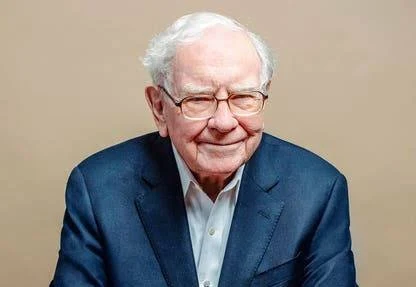
Warren Buffett

Warren Edward Buffett (born 30 August 1930) is an American investor, businessman and philanthropist widely recognised for his long-term approach to investing, disciplined capital allocation and transformation of Berkshire Hathaway into one of the world’s most influential diversified business groups. Often called the Oracle of Omaha, Buffett became internationally known for identifying businesses with durable competitive advantages, investing in them at rational prices and holding them over extended periods.
His investment philosophy combines the principles of value investing, economic analysis, business valuation, financial discipline and behavioural patience. Influenced substantially by Benjamin Graham and later by his longtime business partner Charlie Munger, Buffett developed a distinctive approach that treats a share as partial ownership of an operating business rather than merely a tradable financial instrument.
Buffett led Berkshire Hathaway as chief executive until the end of 2025. Greg Abel became CEO on 1 January 2026. Following a further governance transition in September 2026, Buffett became chairman emeritus, while Howard Buffett assumed the non-executive chairmanship. His career remains a major subject of study in investing, corporate governance and business management.
1. Overview and biographical information

Warren Edward Buffett is an American business executive and investor whose career spans more than seven decades. He is particularly associated with Berkshire Hathaway, an American holding company with interests in insurance, rail transportation, energy, manufacturing, services and consumer products.
Buffett’s reputation is based not simply on his accumulated wealth but on the investment record and business system he helped develop. Rather than building a conventional investment fund, he created a permanent-capital conglomerate that owns operating companies and marketable securities.
His public communication style, especially his annual shareholder letters, has made him an influential teacher of financial literacy, business valuation and corporate stewardship. These letters discuss both successful decisions and mistakes, making them important primary sources for understanding his thinking.
Buffett’s influence extends beyond stock selection. He is studied for his approach to organisational structure, management autonomy, insurance economics, corporate culture, shareholder communication and philanthropy.
2. Early life and family background

Warren Buffett was born on 30 August 1930 in Omaha, Nebraska, during the early years of the Great Depression. He was the second of three children and the only son of Howard Homan Buffett and Leila Stahl Buffett.
His father, Howard Buffett, was a stockbroker and businessman who later served as a Republican member of the United States House of Representatives. Howard’s professional involvement with securities and public affairs introduced Warren to the world of finance at an early age.
His mother, Leila, played an important role in the family environment. Buffett grew up in a household where money, business and public affairs were familiar subjects, although his later investment achievements resulted from his own study, experimentation and professional development.
The family’s move to Washington, D.C., followed Howard Buffett’s election to Congress in 1942. Warren consequently experienced life in both Omaha and the American capital during his formative years.
Omaha remained central to Buffett’s identity. Even after achieving international business success, he continued to maintain his principal residence and business headquarters there.
Family background and influences
His father’s experience in brokerage helped Warren understand how securities markets functioned. His grandfather’s grocery business provided an additional early exposure to commercial activity, pricing, customers and the economics of running a small enterprise.
3. Childhood interests and first business ventures

Buffett demonstrated an interest in earning money, selling products and understanding prices while still a child. His early commercial activities included selling chewing gum, Coca-Cola bottles and magazines. He also worked in his grandfather’s grocery store.
As a newspaper delivery boy, he developed an understanding of routes, customers, recurring income and the importance of systematic work. He also sold golf balls and stamps and undertook other small commercial activities.
His first stock investment
At the age of eleven, Buffett bought three shares of Cities Service Preferred stock for approximately $38 per share. He also bought shares for his sister Doris.
The share price initially declined and subsequently recovered. Buffett sold at a small profit, only to see the price rise further afterwards. The experience became an early lesson in the difficulties of short-term market timing and the importance of patience.
The pinball machine business
During his teenage years, Buffett and a friend invested in a used pinball machine and placed it in a barber shop. They expanded the venture to several locations before selling the operation.
The episode demonstrated several business concepts that later became important in his investment career: identifying demand, acquiring productive assets, generating recurring cash flow and reinvesting profits.
Early investment in farmland
Buffett also saved money from his early earnings and invested in farmland. This was an early example of his interest in assets that could produce economic returns over time.
4. Education and intellectual development

Buffett attended the Wharton School at the University of Pennsylvania in 1947. After two years, he transferred to the University of Nebraska, where he completed a bachelor’s degree in business administration in 1950.
He subsequently enrolled at Columbia Business School, where the renowned economist and investor Benjamin Graham taught investment analysis.
Graham’s ideas about intrinsic value, market prices, financial statements and margin of safety profoundly influenced Buffett’s approach. Buffett regarded Graham’s book The Intelligent Investor as an especially important intellectual influence.
At Columbia, Buffett developed a more rigorous framework for analysing securities. He studied how to estimate the economic value of a business and distinguish that value from the price quoted in the stock market.
Benjamin Graham’s influence
Graham advocated buying securities at substantial discounts to their estimated intrinsic value. This approach was designed to provide a margin of safety against errors in analysis, adverse developments and unpredictable market behaviour.
Buffett initially followed this quantitative bargain-hunting philosophy. Over time, however, he broadened it by placing greater emphasis on business quality, brand strength, management capability and long-term competitive advantages.
Academic background
| Institution | Period | Education |
|---|---|---|
| University of Pennsylvania | 1947–1949 | Wharton studies |
| University of Nebraska | 1949–1950 | Bachelor’s degree in business administration |
| Columbia University | 1950–1951 | Master’s degree in economics |
5. Early professional career

After completing his education, Buffett sought employment with Benjamin Graham’s investment firm, Graham-Newman Corporation. He eventually joined the organisation in 1954.
Working under Graham gave Buffett direct exposure to professional security analysis and the discipline of purchasing undervalued securities. He studied corporate balance sheets, earnings, liquidation values and market mispricing.
The experience was important because it transformed his academic knowledge into a practical investment methodology.
Buffett also worked with investment professional Walter Schloss and developed professional relationships with other value investors.
Return to Omaha
After Graham retired in 1956, Buffett returned to Omaha. Rather than continuing a conventional Wall Street career, he decided to manage investment capital independently.
His return to Omaha became a defining feature of his professional life. He preferred a relatively low-cost environment, a stable personal base and the freedom to make investment decisions without the pressure of operating a large financial institution.
6. Buffett Partnership Ltd.
In 1956, Buffett established Buffett Partnership Ltd., an investment partnership that pooled capital from family members, friends and other investors. He served as the managing partner and invested the pooled funds according to his own investment methodology.
The partnership structure allowed Buffett to apply his investment approach without the restrictions of a traditional publicly traded investment company.
Investment strategy
The partnership pursued undervalued securities and special situations. Buffett looked for companies whose market prices were significantly below his assessment of their underlying economic value.
His investments included securities that appeared inexpensive relative to assets, earnings or business prospects. Some investments involved corporate restructuring, liquidation possibilities or other catalysts that could unlock value.
Partnership structure
The partnership agreement established a compensation structure under which Buffett’s financial reward depended substantially on investment performance. The arrangement aligned his economic interests with those of the limited partners, subject to the terms of the partnership.
Closing the partnership
Buffett announced the dissolution of the partnerships in 1969. He believed that attractive investment opportunities had become more difficult to find at the scale of capital under management and that market conditions did not justify continuing in the same structure.
The partnership’s capital was distributed or redirected, and Buffett increasingly concentrated his efforts on Berkshire Hathaway.
7. Acquisition and transformation of Berkshire Hathaway

Berkshire Hathaway began as a textile manufacturing business with roots in nineteenth-century New England. It was the result of a merger of textile companies and subsequently became associated with Warren Buffett’s investment career.
Buffett began purchasing Berkshire shares in the early 1960s. A disagreement over the price offered in a tender transaction contributed to his decision to acquire control of the company.
In 1965, Buffett gained control of Berkshire Hathaway. Initially, the business remained involved in textiles, but the economics of the textile industry were challenging.
From textiles to a holding company
Buffett gradually shifted Berkshire away from its declining textile operations and toward insurance, investments and the acquisition of productive businesses.
A pivotal development was the acquisition of National Indemnity Company in 1967. Insurance provided Berkshire with a source of investable funds known as insurance float.
Insurance float consists broadly of premiums collected before claims and other insurance obligations are paid. When underwriting is disciplined, the resulting funds can be invested for the benefit of the insurer.
The role of capital allocation
Rather than managing every subsidiary centrally, Berkshire developed a decentralised model. Operating managers generally retained substantial autonomy, while the corporate headquarters concentrated on capital allocation, governance and major strategic decisions.
Berkshire’s business model
Berkshire combines wholly owned operating businesses with publicly traded equity investments. This hybrid structure allows it to participate in the economics of businesses across multiple industries.
Its scale, insurance operations, financial resources and long-term ownership structure have made it an unusual example of a diversified conglomerate.
8. Berkshire Hathaway’s business empire

Berkshire Hathaway owns businesses operating across a wide range of economic sectors. Its structure differs from a traditional investment company because it directly owns many operating businesses and also holds investments in publicly traded companies.
Insurance
Insurance is central to Berkshire’s financial structure. Its major insurance operations include GEICO, General Re and Berkshire Hathaway Primary Group. These businesses provide insurance products and generate premium income, while also exposing Berkshire to underwriting risk and investment risk.
Rail transportation
BNSF Railway is one of the largest freight railway networks in North America. It transports agricultural products, consumer goods, industrial materials and other freight. Its economic importance comes from infrastructure, network scale and the role of rail in the movement of goods.
Energy and utilities
Berkshire Hathaway Energy has interests in regulated electricity and gas utilities, transmission infrastructure and energy-related businesses. This sector combines long-lived assets with substantial capital requirements and regulatory oversight.
Manufacturing, services and retail
Berkshire also owns businesses in industrial manufacturing, building products, distribution, consumer goods and services. These companies operate with varying degrees of market competition, capital intensity and economic cyclicality.
Consumer brands and retail
Its portfolio has included businesses associated with products and services familiar to everyday consumers, such as Dairy Queen, See’s Candies and Nebraska Furniture Mart.
Publicly traded investments
In addition to subsidiaries, Berkshire has invested in publicly listed corporations. Major historical holdings have included Apple, Coca-Cola, American Express and Bank of America. The size and composition of these holdings have changed over time.
| Sector | Representative businesses | Economic characteristics |
|---|---|---|
| Insurance | GEICO, General Re | Premiums, claims and investment float |
| Railways | BNSF Railway | Infrastructure and freight transport |
| Energy | Berkshire Hathaway Energy | Utilities and long-term assets |
| Manufacturing | Industrial subsidiaries | Products and business-to-business markets |
| Consumer | See’s Candies, Dairy Queen | Brands and consumer demand |
| Investments | Apple, Coca-Cola historically | Listed equity ownership |
9. Warren Buffett’s investment philosophy

Buffett’s investment philosophy developed from the principles of value investing, but it evolved beyond the strict quantitative approach associated with his early mentor, Benjamin Graham.
At its core, Buffett’s method involves estimating the economic value of a business, assessing its financial strength, evaluating management quality and comparing the estimated value with the market price.
Stocks as ownership interests
Buffett has consistently argued that a stock represents fractional ownership in a real business. An investor should therefore evaluate the underlying enterprise rather than focus exclusively on daily share-price movements.
This perspective encourages investors to study revenue, costs, profitability, debt, cash generation, competitive positioning and the quality of management.
Intrinsic value
Intrinsic value refers to the estimated present value of the cash that a business can generate for its owners over its remaining life. It is an estimate rather than a directly observable market figure.
Buffett’s approach places substantial emphasis on future earning power and the durability of a company’s competitive position.
Margin of safety
The margin of safety is the difference between estimated intrinsic value and the purchase price. Buying below estimated value provides a cushion against analytical errors, economic uncertainty and unfavourable developments.
Quality businesses
Over time, Buffett increasingly favoured businesses with strong brands, pricing power, high returns on capital, predictable demand and durable competitive advantages.
Long-term ownership
Buffett’s investment philosophy discourages unnecessary trading. When he understands a business and believes its long-term economics remain attractive, he may hold the investment for many years.
10. Core investment principles
Buffett’s investment framework can be understood through a group of interconnected principles. They are not a mechanical formula; they are analytical disciplines that help investors assess businesses and manage uncertainty.
1. Invest in understandable businesses
An investor should understand how a company makes money, what drives customer demand, how it competes and what could damage its economics. Buffett refers to the limits of one’s knowledge as the circle of competence.
2. Look for durable competitive advantages
A company with an economic moat can protect its profitability against competitors. Sources of advantage may include brand strength, distribution networks, switching costs, cost advantages and network effects.
3. Examine management integrity and ability
Buffett places considerable importance on management honesty, capital allocation skills and the treatment of shareholders. A strong business can still be damaged by poor leadership.
4. Understand financial statements
Investors should analyse the balance sheet, income statement and cash-flow statement. Important measures include return on equity, operating margins, debt, free cash flow and capital expenditure.
5. Avoid excessive debt
Financial leverage can amplify returns, but it also increases financial fragility. Buffett generally favours businesses with strong financial positions and manageable debt obligations.
6. Be patient
Investors do not need to act on every market opportunity. Waiting for an attractive combination of business quality, valuation and certainty can be more productive than constant trading.
7. Exploit market irrationality
Buffett draws on the idea of Mr. Market, introduced by Benjamin Graham. Market prices may fluctuate substantially without corresponding changes in underlying business value. An investor should use prices rather than allow prices to dictate emotional decisions.
8. Reinvest intelligently
Businesses that can reinvest earnings at attractive incremental returns may compound their value over long periods. Capital allocation is therefore central to evaluating management.
9. Recognise opportunity cost
Capital invested in one company cannot simultaneously be invested in another. Investment decisions should consider the best alternative available at the time.
10. Control emotions
Fear, greed, overconfidence and herd behaviour can undermine investment decisions. Buffett’s approach emphasises rational analysis and independent judgment.
11. Major investments and business case studies
Buffett’s investment history contains examples of both successful long-term ownership and investments that did not meet expectations. Studying individual cases helps explain how his philosophy developed in practice.
American Express
Buffett invested in American Express during the 1960s after the company suffered reputational damage following the salad oil scandal. His analysis focused on the durability of the company’s consumer trust, brand and payment network.
The investment is often discussed as an example of identifying a valuable franchise during a period of temporary difficulty.
Coca-Cola
Berkshire began building its major Coca-Cola position in 1988. Buffett recognised the company’s global brand, distribution network, consumer familiarity and potential for durable demand.
The investment became one of the best-known examples of his preference for businesses with strong brands and enduring competitive advantages.
GEICO
Buffett’s association with GEICO began long before Berkshire acquired full ownership. He recognised the potential of the insurer’s direct-to-consumer distribution model and its cost advantages.
See’s Candies
Berkshire acquired See’s Candies in 1972. The business became an important example of how a strong brand, customer loyalty and pricing power can support attractive economics.
Apple
Berkshire began accumulating shares in Apple in the 2010s. Buffett later described the company primarily as a consumer business with an exceptionally strong ecosystem, rather than merely a technology company.
Berkshire subsequently reduced its Apple holding significantly. The investment illustrates how portfolio positions can change even when a company remains economically important.
IBM
Berkshire invested in IBM beginning in 2011. Buffett later sold the holding after reassessing the company’s competitive position and future prospects. The investment is a useful example of the difficulty of forecasting technological change.
Bank of America
Berkshire invested in Bank of America through a major preferred-stock investment and warrants arrangement in 2011. The transaction demonstrated Buffett’s ability to negotiate investment terms with a strong combination of income and potential equity upside.
Investment case-study comparison
| Company | Key investment idea | Learning point |
|---|---|---|
| American Express | Brand and customer trust | Temporary problems may create opportunity |
| Coca-Cola | Global brand and distribution | Durable competitive advantage |
| GEICO | Low-cost insurance distribution | Cost structure matters |
| See’s Candies | Brand and pricing power | Quality can justify a higher price |
| Apple | Consumer ecosystem and loyalty | Analyse economic reality, not labels |
| IBM | Technology and competitive change | Forecasting has limits |
| Bank of America | Structured financial investment | Deal terms influence returns |
12. Relationship with Charlie Munger

Charlie Munger was Buffett’s longtime business partner and an influential intellectual collaborator. The two became acquainted in Omaha in 1959 and developed a relationship that lasted for more than six decades.
Munger’s influence helped transform Buffett’s investment approach. While Graham had taught Buffett to seek securities trading below their intrinsic value, Munger encouraged him to pay a reasonable price for exceptional businesses.
From cheap businesses to excellent businesses
The evolution of Buffett’s approach is often described as a shift from buying merely inexpensive companies to acquiring high-quality companies with durable competitive advantages.
The acquisition of See’s Candies is frequently discussed as an important illustration of this development.
Shared principles
Buffett and Munger valued rationality, intellectual honesty, independent thinking, patience and the avoidance of unnecessary complexity. They also emphasised the importance of learning from other disciplines, including psychology, mathematics and business.
Munger’s death
Charlie Munger died on 28 November 2023 at the age of 99. His death marked the end of one of the most influential partnerships in modern corporate and investment history.
13. Management style and capital allocation
Buffett’s management approach is characterised by decentralisation, trust in subsidiary managers and a relatively small corporate headquarters. This is unusual compared with many large conglomerates, which maintain extensive central management structures.
Decentralised management
Berkshire’s operating companies generally have significant freedom to manage their own daily operations. Buffett traditionally avoided unnecessary interference in the operational decisions of capable managers.
Capital allocation
The corporate centre focuses on deciding where Berkshire’s capital should be deployed. Possible uses include acquiring businesses, expanding subsidiaries, purchasing publicly traded securities, repurchasing Berkshire shares and retaining cash.
Management selection
Buffett has repeatedly emphasised the importance of capable and trustworthy managers. His preference is to acquire businesses with strong leadership and then allow managers to continue running them with substantial autonomy.
Shareholder communication
Berkshire’s annual letters are known for their direct language, discussion of financial performance and willingness to acknowledge mistakes. Buffett’s communication philosophy treats shareholders as long-term business partners.
14. Personal life and family
Despite his immense financial success, Buffett has maintained a comparatively modest public lifestyle. His long association with Omaha, Nebraska, and his continued use of the home he purchased in 1958 have become well-known aspects of his personal story.
Marriage and children
Buffett married Susan Thompson in 1952. They had three children: Susan Alice, Howard Graham and Peter Andrew.
Although Warren and Susan lived separately for many years after 1977, they remained married until her death in 2004. Susan played an important role in Buffett’s personal life and philanthropy.
Buffett married Astrid Menks in 2006. She had been a longstanding part of his personal life and household.
Interests and lifestyle
Buffett is widely known for his enjoyment of reading, financial analysis, bridge and the study of business. He has frequently described reading and continuous learning as important parts of his daily routine.
His public persona is associated with simplicity, humour, Omaha roots and an interest in communicating complex economic ideas in accessible language.
15. Wealth and financial achievements
Warren Buffett became one of the wealthiest individuals in modern history through his ownership of Berkshire Hathaway shares and decades of investment compounding.
His fortune is closely linked to the growth in Berkshire’s intrinsic value and market capitalisation. Rather than relying primarily on salaries or short-term trading profits, Buffett’s wealth has been generated largely through long-term ownership of equity.
The role of compounding
Compounding occurs when investment returns are reinvested and subsequently generate additional returns. Over long periods, even relatively small differences in annual rates of return can produce substantial differences in accumulated wealth.
Buffett’s investment history is frequently used to illustrate the relationship between time, capital preservation, reinvestment and compounding.
Sources of wealth
- Ownership of Berkshire Hathaway shares.
- Growth in the economic value of Berkshire’s subsidiaries.
- Long-term equity investments in publicly traded businesses.
- Reinvestment of earnings and insurance-related capital.
Understanding net worth estimates
Published billionaire rankings estimate wealth using market prices, reported holdings and other available information. These estimates change with share prices, donations, taxes, asset valuations and reporting methodologies.
A person’s estimated net worth should not be confused with cash available for personal spending. Buffett’s publicly reported wealth has also been reduced over time by substantial charitable donations.
Investment performance and comparisons
Berkshire’s historical performance is often compared with the S&P 500. Such comparisons require care: the periods selected, dividends, taxes, share classes, reinvestment assumptions and changes in corporate structure can materially affect results.
16. Philanthropy and charitable giving

Philanthropy is an important part of Buffett’s public legacy. He has repeatedly stated his intention to distribute the overwhelming majority of his wealth to charitable causes rather than pass it on as a large inherited fortune.
Commitment to charitable giving
Buffett announced a major philanthropic commitment in 2006, stating that he intended to donate the majority of his wealth to charitable foundations.
A substantial portion of his donations has gone to foundations associated with his family and to the Bill & Melinda Gates Foundation.
The Giving Pledge
In 2010, Buffett and Bill Gates launched The Giving Pledge, an initiative encouraging wealthy individuals and families to commit to giving away at least half of their wealth to philanthropy during their lifetimes or through their estates.
Family foundations
Buffett’s charitable giving has supported organisations associated with the Susan Thompson Buffett Foundation, the Howard G. Buffett Foundation, the Sherwood Foundation and the NoVo Foundation. These organisations work in different areas, including education, health, social development and other charitable activities.
Philanthropic philosophy
His approach reflects the belief that large fortunes can be used to address social problems and support institutions capable of producing public benefits. He has also argued that children of wealthy families should have opportunities to develop independently.
17. Political, economic and social views
Buffett has publicly discussed taxation, fiscal policy, economic inequality, financial regulation, corporate responsibility and the role of government. His positions have attracted attention because of his influence and substantial personal wealth.
Taxation
Buffett has argued that the effective tax rates paid by some extremely wealthy individuals can be lower than those paid by middle-income workers. This argument became widely known through public discussion of what is often called the Buffett Rule.
Economic inequality
He has expressed concern about the concentration of wealth and opportunity in the United States. His philanthropic commitments and public comments have often addressed the responsibilities associated with extreme wealth.
Financial regulation
Buffett has commented on the importance of sound financial institutions, risk management and the potential consequences of excessive leverage. His views are shaped by decades of experience in insurance, banking and corporate investment.
Political independence
Although Buffett has expressed views on public policy and has supported political candidates and causes at different times, his business philosophy is not reducible to a single political or economic ideology.
18. Criticism, investment mistakes and controversies
A balanced account of Buffett’s career must include criticism, investment mistakes and questions about the wider economic consequences of Berkshire Hathaway’s activities. His record, although exceptional in many respects, is not without limitations.
Early textile investment
Buffett later acknowledged that acquiring control of Berkshire, a structurally challenged textile manufacturer, was a mistake relative to the capital that could have been deployed elsewhere. He has described the decision as an expensive lesson.
Investment errors
Berkshire’s history includes investments that failed to meet expectations. Buffett has discussed mistakes involving companies such as Dexter Shoe and the earlier decision to invest in US Airways. His shareholder letters provide useful explanations of the reasoning behind some of these decisions.
Missed opportunities
Buffett has also acknowledged opportunities he did not pursue, including businesses whose future economic potential he underestimated. These examples illustrate the limits of forecasting and the importance of recognising one’s knowledge boundaries.
Cash holdings and opportunity cost
Critics sometimes question Berkshire’s large cash and Treasury holdings, arguing that excessive liquidity can reduce returns when attractive investments are available. Buffett’s defence has generally emphasised financial resilience and the importance of waiting for sufficiently attractive opportunities.
Corporate and environmental issues
Berkshire’s subsidiaries operate in sectors that face regulatory, environmental, labour and consumer-protection challenges. Energy infrastructure, insurance practices and industrial operations have generated public scrutiny at different times.
These matters should be evaluated using specific company records, regulatory findings and dated reporting rather than generalised claims about Buffett personally.
Succession and institutional dependence
Some observers have questioned whether Berkshire’s culture and investment performance can be sustained after Buffett and Munger. The transition to Greg Abel and the evolving governance structure are therefore important tests of the durability of the business model.
19. Retirement, succession and Berkshire’s future

Buffett’s succession has been one of the most important governance issues in Berkshire Hathaway’s modern history. Because his investment judgment, capital allocation decisions and public communication were central to the company’s identity, the transition required careful planning.
Greg Abel’s appointment
In May 2025, Buffett announced that he would recommend Greg Abel as his successor as CEO. Berkshire’s board subsequently approved the appointment, effective 1 January 2026.
Abel had previously served as Berkshire’s vice chairman for non-insurance operations and led Berkshire Hathaway Energy. His experience within the organisation made him a significant figure in its succession planning.
CEO transition
At the beginning of 2026, Abel assumed the CEO role. Buffett ceased to be chief executive but remained involved with Berkshire in an advisory and governance capacity.
September 2026 governance transition
In September 2026, Buffett stepped down from the chairmanship and became chairman emeritus. Howard Buffett, his son, succeeded him as non-executive chairman. This distinction matters: Greg Abel leads the company as CEO, while Howard Buffett’s chairmanship is non-executive.
What the transition means
Berkshire’s future will depend on its ability to preserve its decentralised operating culture, financial discipline, insurance capabilities and capital allocation standards without relying on Buffett as its chief executive.
The transition also provides an opportunity to assess whether the principles established by Buffett and Munger can remain embedded in an institution beyond its founding leaders.
20. Influence on modern investing and business
Buffett has influenced generations of investors, business students, executives and entrepreneurs. His career is widely studied because it combines long-term investment performance with a distinctive corporate management model.
Influence on value investing
Buffett helped popularise value investing by demonstrating how the analysis of business fundamentals can be applied over long investment horizons. His public letters made ideas such as intrinsic value, economic moats and capital allocation accessible to a broad audience.
Influence on corporate management
Berkshire’s decentralised structure has influenced discussions about corporate autonomy, trust in managers and the advantages of a relatively lean corporate headquarters.
Influence on financial education
His annual shareholder letters are frequently used as educational material in business schools and investment courses. They explain financial concepts through practical examples and accessible language.
Influence on philanthropy
Through The Giving Pledge and his own charitable commitments, Buffett has influenced conversations about wealth distribution, private philanthropy and the social responsibilities of wealthy individuals.
Legacy
Buffett’s enduring legacy is likely to be assessed through several dimensions: Berkshire’s long-term performance, the institution he helped build, his investment philosophy, his public writing and his philanthropic commitments.
21. Books, shareholder letters, speeches and documentaries
Buffett has not written a conventional autobiographical book, but his annual shareholder letters, interviews, speeches and public appearances provide an extensive record of his thinking.
Annual shareholder letters
The letters written to Berkshire shareholders are among the most important primary sources for studying Buffett’s investment philosophy and corporate management approach.
They cover business performance, insurance economics, investment decisions, corporate governance, economic conditions and the mistakes made by Berkshire’s management.
Recommended books about Buffett
Documentaries and interviews
The HBO documentary Becoming Warren Buffett explores his personal life, business career and investment philosophy. CNBC’s Warren Buffett Archive contains historical interviews and annual meeting recordings.
22. Warren Buffett: Historical timeline
The following chronology summarises the major events in Buffett’s personal, educational and professional life.
Born in Omaha, Nebraska, on 30 August.
His father enters the US House of Representatives.
Begins studies at the University of Pennsylvania.
Graduates from the University of Nebraska.
Completes graduate studies at Columbia University.
Marries Susan Thompson.
Joins Graham-Newman Corporation.
Establishes Buffett Partnership Ltd.
Gains control of Berkshire Hathaway.
Berkshire acquires National Indemnity.
Dissolves his investment partnerships.
Berkshire acquires See’s Candies.
Ends Berkshire’s textile manufacturing operations.
Berkshire begins its major Coca-Cola investment.
Susan Thompson Buffett dies.
Announces major charitable giving commitment; marries Astrid Menks.
Launches The Giving Pledge with Bill Gates.
Berkshire invests in IBM and Bank of America.
Berkshire begins accumulating Apple shares.
Charlie Munger dies on 28 November.
Announces Greg Abel’s succession as CEO.
Greg Abel becomes CEO on 1 January.
Buffett becomes chairman emeritus; Howard Buffett assumes the non-executive chairmanship.
23. Business lessons and investment ideas associated with Buffett
Buffett’s career provides a range of practical lessons for investors, entrepreneurs, managers and business students. These lessons should be understood as principles for analysis, not guarantees of success.
Lessons for investors
- Understand the business before investing.
- Distinguish market price from intrinsic value.
- Prefer financially resilient companies.
- Look for durable competitive advantages.
- Consider management integrity and capital allocation.
- Allow time for compounding to work.
- Avoid emotional buying and selling.
- Recognise the limits of your knowledge.
- Compare opportunities using opportunity cost.
- Learn from mistakes rather than defend them.
Lessons for entrepreneurs
- Build businesses that solve genuine customer problems.
- Develop a brand customers trust.
- Protect cash flow and financial stability.
- Reinvest earnings where returns justify it.
- Hire competent and trustworthy managers.
- Do not confuse rapid expansion with value creation.
- Build a business that can operate without constant owner intervention.
Selected quotations
Note: Quotations are commonly attributed to Buffett. Exact wording and original publication contexts should be verified before republication in a scholarly quotation collection.
24. Frequently asked questions about Warren Buffett
Who is Warren Buffett?
Warren Buffett is an American investor, businessman and philanthropist best known for transforming Berkshire Hathaway into a major diversified holding company.
When and where was Warren Buffett born?
He was born on 30 August 1930 in Omaha, Nebraska, United States.
Why is Warren Buffett called the Oracle of Omaha?
The nickname reflects his long association with Omaha and his reputation for successful investment judgment and influential business commentary.
What is Warren Buffett famous for?
He is famous for long-term value investing, Berkshire Hathaway, his shareholder letters, business acquisitions and philanthropic commitments.
What is Berkshire Hathaway?
Berkshire Hathaway is a diversified American holding company with businesses in insurance, rail transportation, energy, manufacturing, services and consumer products, alongside publicly traded investments.
Who influenced Warren Buffett’s investment philosophy?
Benjamin Graham was his principal early investment mentor. Charlie Munger later influenced his preference for high-quality businesses with durable competitive advantages.
What is value investing?
Value investing is an investment approach that seeks to purchase securities at prices below their estimated intrinsic value, allowing for a margin of safety.
What is Buffett’s margin of safety principle?
It means purchasing an investment at a sufficiently large discount to its estimated intrinsic value to provide protection against errors and uncertainty.
Who was Charlie Munger?
Charlie Munger was Buffett’s longtime business partner and Berkshire Hathaway’s vice chairman. He died in November 2023.
Who is Warren Buffett’s successor as CEO of Berkshire Hathaway?
Greg Abel became Berkshire Hathaway’s CEO on 1 January 2026.
Who is the chairman of Berkshire Hathaway after Buffett’s 2026 transition?
Following the September 2026 transition, Howard Buffett became non-executive chairman and Warren Buffett became chairman emeritus.
Does Warren Buffett still own Berkshire Hathaway shares?
Yes. He has retained substantial share ownership, although he has committed to distributing his wealth to charitable causes and has made significant donations over time. Exact holdings change with donations and transactions.
What are Warren Buffett’s most famous investments?
Historically prominent investments have included Coca-Cola, American Express, Apple and other financial and consumer businesses. Berkshire’s holdings have changed over time.
What is The Giving Pledge?
The Giving Pledge is a philanthropic initiative launched by Warren Buffett and Bill Gates in 2010 to encourage wealthy individuals to commit at least half of their wealth to charitable causes.
Does Warren Buffett recommend buying a particular stock?
His public writings discuss investment principles and historical decisions. They should not be treated as current personalised investment recommendations.
What can entrepreneurs learn from Warren Buffett?
Entrepreneurs can study his emphasis on business quality, customer loyalty, financial discipline, cash generation, management integrity and long-term decision-making.
26. References and authoritative sources
The following sources provide biographical information, corporate records, original shareholder communications and historical material. For scholarly use, financial claims should be checked against the original filing or annual report rather than a secondary summary.
Primary sources
- Berkshire Hathaway Inc. Official company website, annual reports, governance information, news releases and corporate disclosures. Visit official website.
- Warren Buffett’s shareholder letters. Historical annual letters published by Berkshire Hathaway. Read shareholder letters.
- Berkshire Hathaway Annual Report 2025. Corporate performance, business operations, financial statements and management commentary. Read annual report.
- United States Securities and Exchange Commission. Berkshire Hathaway regulatory filings and company disclosures. SEC company records.
- CNBC Warren Buffett Archive. Historical interviews, shareholder meeting recordings and transcripts. Explore archive.
Secondary sources
- Encyclopaedia Britannica. Biographical and historical background on Warren Buffett. Read biography.
- Reuters. Reporting on Berkshire Hathaway’s 2026 governance transition. Read report.
- Forbes. Billionaire wealth rankings and wealth estimates. Real-time rankings.
- The Giving Pledge. Information on the philanthropic initiative co-founded by Buffett and Bill Gates. Official website.
Image credits and licensing
Images in this article use external Wikimedia Commons file links. Before publishing, verify each image’s actual file, author, licence, attribution requirements and commercial-use permissions on its individual Commons file page. An image appearing on Commons does not automatically mean it is free of all restrictions.